Oct 30, 2026Material Science
How Much Compression Is Too Much? A Buyer's Guide to Fit Pressure in Activewear
Compression sells leggings - and returns them, when the level is wrong for the customer. Light, medium and high pressure compared: how each is engineered, who it fits, and how to spec it.
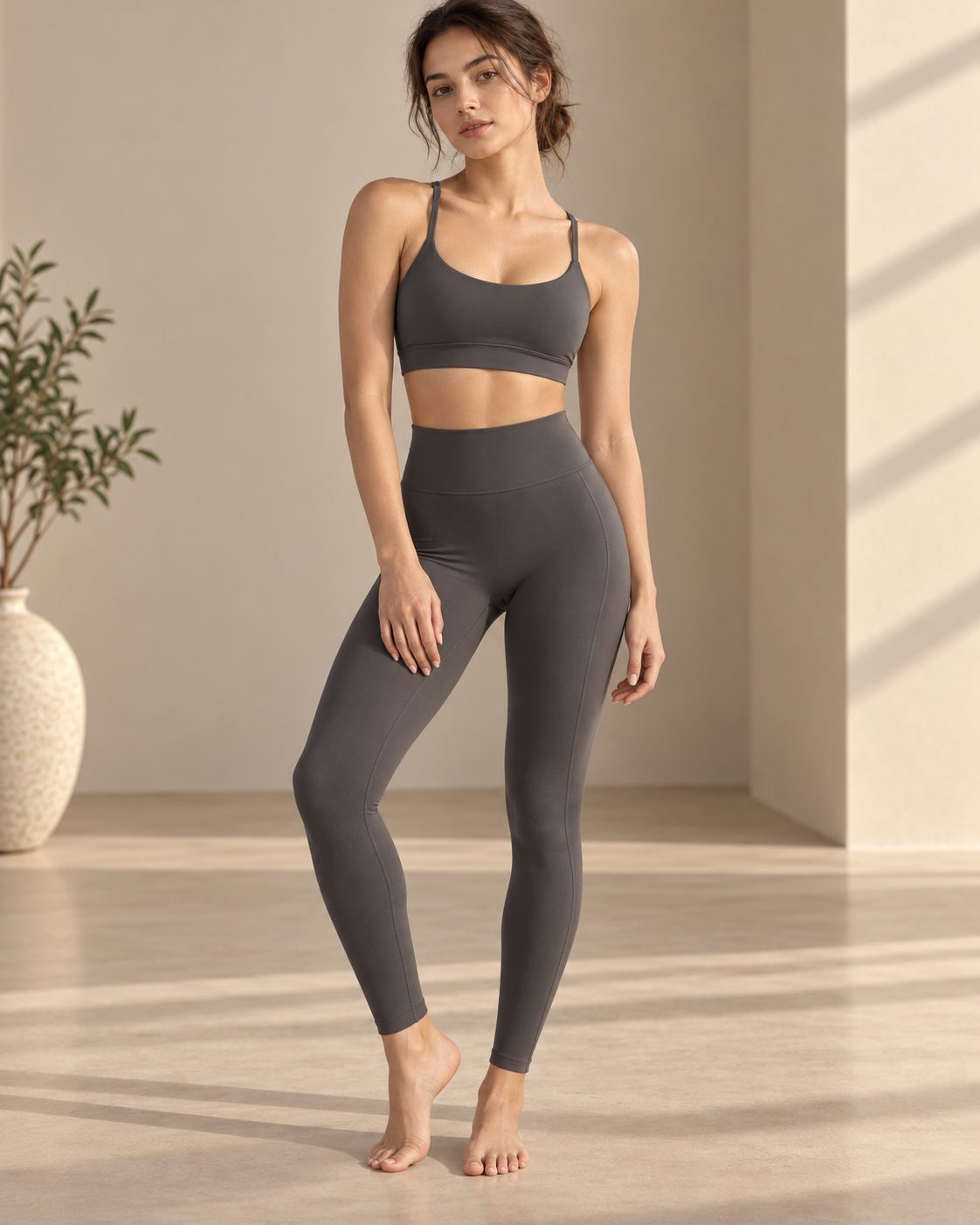
Compression is the most misused word in activewear marketing. Listings promise it on everything from featherweight lounge pants to surgical-grade sleeves, and customers order expecting entirely different things by the same word. For a brand, the practical questions are: what compression level is my style actually delivering, who is it for, and how do I spec it so the sample matches the promise? Here is the working framework.
The Three Working Levels
Light: comfort stretch
Fabric around 180-220 GSM with moderate spandex content, fitted but never tight. The garment holds its shape and wicks, and the customer forgets she is wearing it. Best for loungewear, flowy yoga pants, and everyday wear. Marketed honestly as a fit, not as compression.
Medium: shaping support
Denser knits around 220-280 GSM with higher spandex, cut slightly smaller on the pattern so the fabric works against the body. This is the classic legging feel - holds muscles, smooths lines, stays put through a full class. The sweet spot for most yoga and pilates brands, and the level most customers expect from the word legging.
High: true compression
Engineered knit structures with graded pressure that actually measurably squeezes - the territory of running tights, recovery wear and medical-adjacent products. It requires real compression engineering: pressure mapping, graded tension by zone, and fit models tested in motion. A factory without compression experience cannot deliver it by simply sewing a dense fabric tighter.
What Physically Creates the Pressure
Three levers, and they multiply: fabric construction (denier-like density and spandex percentage), pattern reduction (cutting the panel smaller than the body measurement so the knit must stretch to fit), and garment architecture (waistband width, panel orientation, seam layout). Change one without the others and you get either a loose garment sold as compression or an unwearable squeeze. The fabric-side numbers are covered in the GSM and knit density guide.
The Failure Modes to Test For
The squeeze test at the waistband
High compression with a narrow waistband digs in and creates the muffin effect customers photograph for one-star reviews. Pressure at the waist needs a wide, higher-rise band to distribute load - the waistband trade-offs matter more as compression increases.
The knee-bag test
Fabric that is dense enough to compress but low on recovery bags at the knee after an hour of wear. Stretch-and-recover testing on the actual knit, not just on paper specs, catches it.
The on-off test
True high compression is hard to put on - that is expected - but if the sample takes visible fighting to get into, the pattern reduction is beyond the fabric's capacity and seams will fail early. Balance the two in sampling, not after bulk.
How to Spec It in the Tech Pack
Write the compression intent in words a factory can act on: target level (light/medium/high), the fabric with GSM and spandex percentage, and the pattern reduction strategy. Then validate on the fit model in motion - squats, lunges, a ten-minute wear - and grade the reduction across sizes rather than scaling one sample. Compression that is true at S and crushing at XL is a grading failure, and the inclusive-sizing discipline applies fully here.
Match the Promise to the Product
The commercial rule is simple: market the level you actually engineered. Light-comfort styles should never be sold as compression - the returns write themselves. A medium-level legging that honestly says supportive, squat-proof and shaping earns better reviews than an over-promised high-compression claim the garment cannot keep. Compression is a fit engineering outcome, not a tag.
Developing compression styles and want the pressure engineered, not guessed? Send us your target level and reference garment - we will map the fabric, pattern reduction and grading, and fit-test the sample in motion before bulk. info@misskyoga.com or WhatsApp +86 136 4085 9182.