Sep 20, 2026Craftsmanship & Quality
How to Choose a Yoga Wear Manufacturer in China: 7 Checks Before You Send a Deposit
A practical guide from Guangzhou factory founder Kate Chan on the 7 critical quality and communication checks every yoga brand founder should run before wiring a production deposit.
1. Can They Explain Fabric Mechanics Without Checking a Script?
Activewear is technical wear. If the person answering your messages cannot explain the physical properties of their textiles without putting you on hold to check with an engineer, you are dealing with a middleman or an inexperienced merchandising rep.
Ask them about fabric composition, weight in grams per square meter (gsm), and stretch recovery.
A true activewear maker understands how a 75/25 nylon-spandex blend behaves compared to an 80/20 mix. They understand that a 220 gsm fabric offers a lighter second-skin feel suitable for hot yoga, while a 260 gsm fabric provides the compressive structure and opacity needed for squat-proof pilates leggings.
When you ask how a knit recovers after twenty cross-grain stretches, they should be able to tell you directly. If they stumble on basic textile physics, they will not be able to catch tension errors during mass cutting.
Look for suppliers who know their material library inside and out.
2. Does the Physical Sample Match What Was Promised?
Never approve production based solely on digital photos, flat sketches, or 3D renderings. You need physical fabric in your hands.
When your sample arrives, ignore the exterior aesthetics for a moment. Instead, hold it up to natural window light. Stretch the seat of the leggings over your hand to verify opacity and see if the knit grins or turns sheer. Check the hand-feel against your inner arm to test for surface softness and friction.
Suppliers sometimes send a "golden sample" made by their single best master tailor, only for bulk production to be farmed out to general assembly lines.
Inspect the sample with an uncompromising eye. If the sample already shows tension flaws, puckered collars, or uneven waistband edges, their bulk run will be noticeably worse.
3. How Clear and Direct Is Their Communication During Sampling?
Sampling is a stress test for your working relationship. Pay close attention to how the factory communicates when a revision is needed.
Are their replies vague? Do they ignore two out of three bullet points in your feedback email?
A reliable manufacturer reads every line of your comments. When you ask to adjust a waistband height or shift a gusset seam, they should acknowledge the exact technical adjustment, explain how the pattern will change, and give you a clear view of the next step.
Pay attention to communication speed, but value clarity even more. A fast response that misunderstands your request costs you weeks of rework. A thoughtful, accurate response that clarifies pattern balance saves your launch.
If communication feels chaotic while making one sample, it will become unmanageable when hundreds of pieces are on the sewing floor.
4. Does Their Production Route Actually Match Your Business Stage?
Many emerging brands choose the wrong production model and run out of cash before their second order. A capable partner will help you identify the right path for your current stage:
• Private Label: Taking pre-developed, factory-perfected styles and applying your own custom branding, care labels, and packaging. This is ideal if you need to go to market with minimal pattern risk and proven fits.
• ODM (Original Design Manufacturing): Selecting base silhouettes from the factory's design library and modifying specific elements like waistbands, strap configurations, leg lengths, or custom color palettes.
• OEM (Original Equipment Manufacturing): Developing completely bespoke patterns, custom paneling, and unique grading from your own tech packs from scratch.
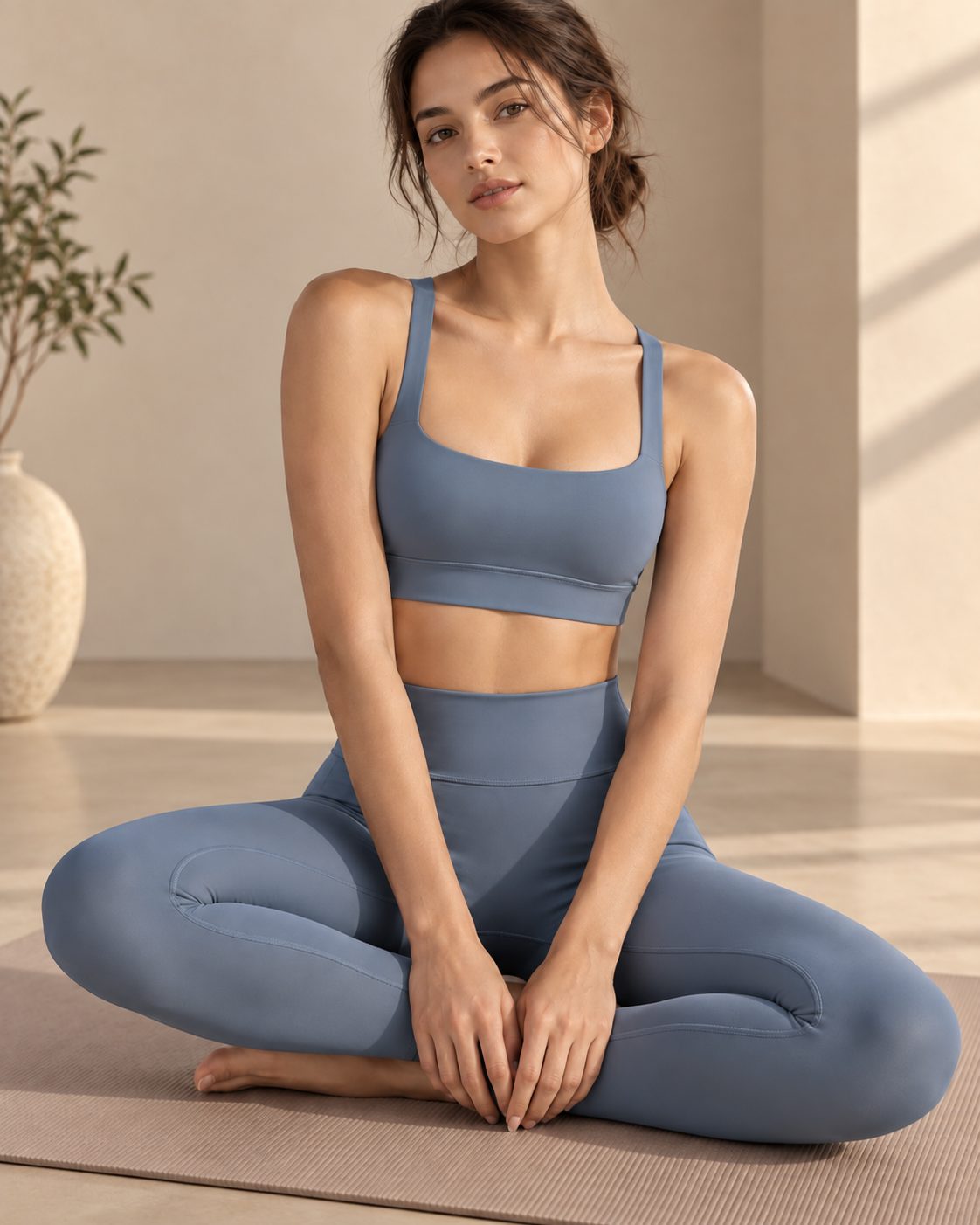
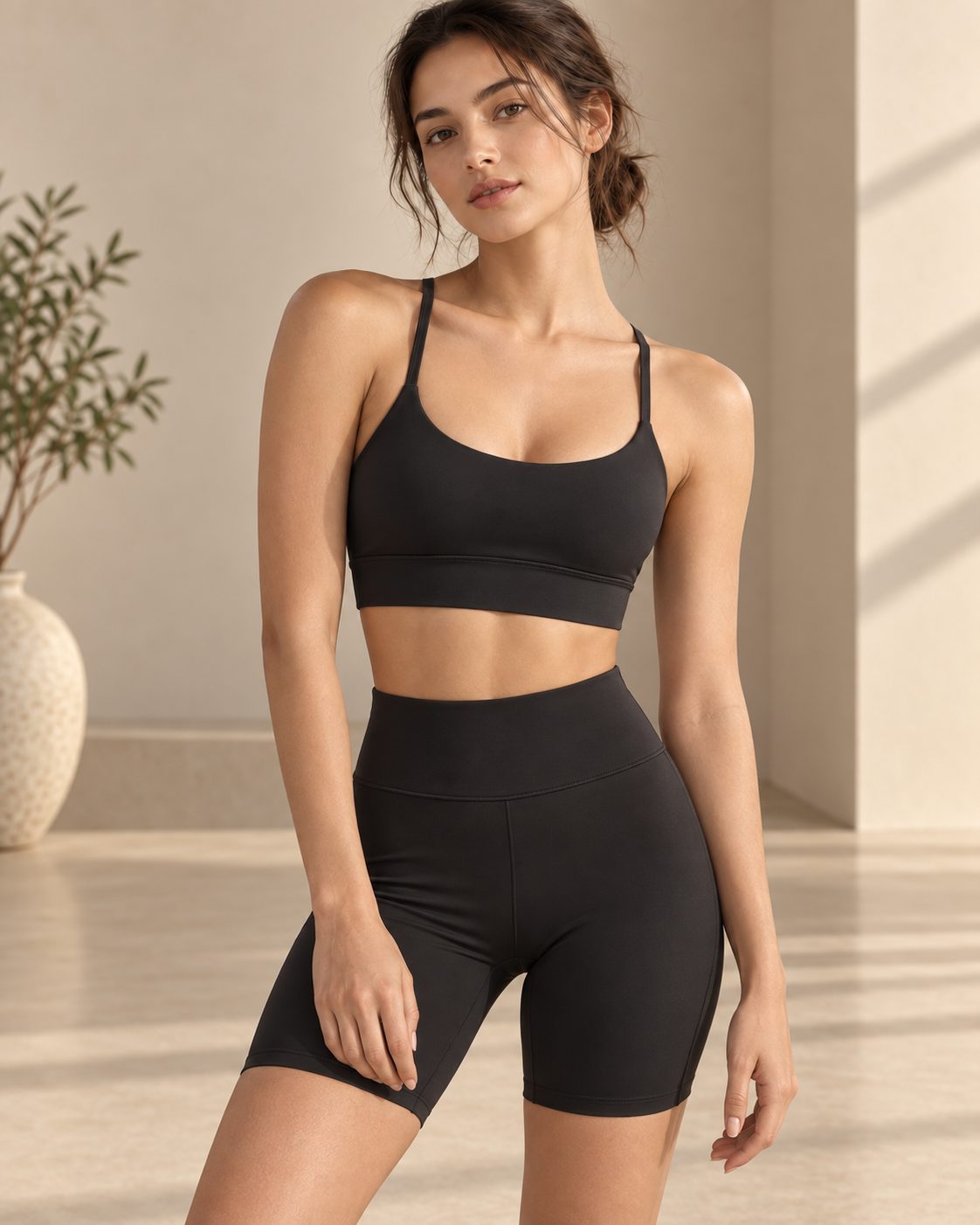
At Miss K, we often see overseas founders jump straight into full OEM development when a curated private label approach would serve them better. For example, our 8-style 2026 hero range was engineered precisely so founders could launch with balanced silhouettes in core shades like Black, Espresso, Cream, Sage, and Blue Grey without spending half a year debugging basic patterns.
Match your manufacturer to where your brand is today, not where you hope it will be in five years.
5. Turn the Garment Inside Out: The Stitch and Finish Check
The true quality of an activewear factory is hidden on the inside of the garment. Anyone can make the outside of a top look presentable on a mannequin.
Turn the sample completely inside out and check these three areas:
• Flatlock Seams: Look closely at the interlock stitching along high-friction areas. The threads should sit completely flat against the fabric without loops, skipped stitches, or tension bunching. Pull the seam hard horizontally. The stitch should give with the fabric and snap back without cracking.
• Waistband Construction: Check where the elastic or inner support layer joins the shell fabric. If the inner seam is bulky, it will dig into your customer's skin during a forward fold.
• Thread Trimming and Reinforcements: Look at seam intersections, strap joints, and the ends of the cuffs. Are there loose thread tails left hanging? Are high-stress points reinforced with clean bar-tacks?
Clean interior finishing requires dedicated machines, sharp cutters, and skilled operators who take pride in their craft.
6. Are They Honest About Their Production Limitations?
Be wary of any factory representative who instantly says "yes" to every single request you make.
No single factory excels at everything. A workshop set up for precision four-needle six-thread flatlock stitching on nylon-spandex activewear operates differently from a facility built for heavy cotton French terry hoodies or seamless circular knitting.
Ask your supplier difficult questions about your design. If you propose an overly complex seam placement across a stretch zone or an incompatible fabric weight, an honest maker will push back. They will explain why a specific detail might cause twisting, puckering, or comfort issues during movement, and they will suggest a functional alternative.
A supplier who protects you from poor design choices before you send a deposit is a partner. A supplier who agrees to impossible specifications just to take your money is a liability.
7. Do They Provide Clear Logistics Support After Final Payment?
The manufacturing process does not end when the last stitch is sewn.
Before you wire your deposit, ask how the factory handles the final phase. How do they fold, polybag, and carton-pack the goods? Activewear left packed improperly can develop permanent heat creases during ocean or air transit.
Ask how they manage export documentation, packing lists, commercial invoices, and hand-offs to freight forwarders. A factory that ships worldwide regularly will have established procedures to support your logistics, whether you are booking your own cargo space or having them coordinate door-to-door delivery.
If a supplier treats shipping as an afterthought, you risk costly delays at customs long after your payment has cleared.
Finding the Right Fit for Your Brand
Building an activewear line is tactile, detailed work. It comes down to clean patterns, honest materials, and clear communication between your studio and the cutting table.
Take your time during the sampling stage. Pull the seams, test the fabric recovery, ask direct questions, and pay attention to how your supplier answers.
If you are currently evaluating production options for your yoga or pilates brand, we are always open to conversation. At Miss K, we produce our hero range using balanced ~75/25 nylon-spandex blends in standard 200 to 260 gsm weights, available in timeless palettes including Black, Espresso, Cream, Sage, and Blue Grey, alongside custom OEM and ODM development for international labels.
Explore our latest base silhouettes on our products page, or reach out directly to discuss your project.
Email: info@misskyoga.com | WhatsApp: +86 136 4085 9182