Sep 20, 2026Services Overview
How to Source Yoga Wear from China: The Complete 2026 Guide
The complete sourcing guide for yoga and activewear brand founders: production routes, supplier vetting, fabrics, sampling, MOQ, QC and shipping - written from Guangzhou, not from a sales deck.
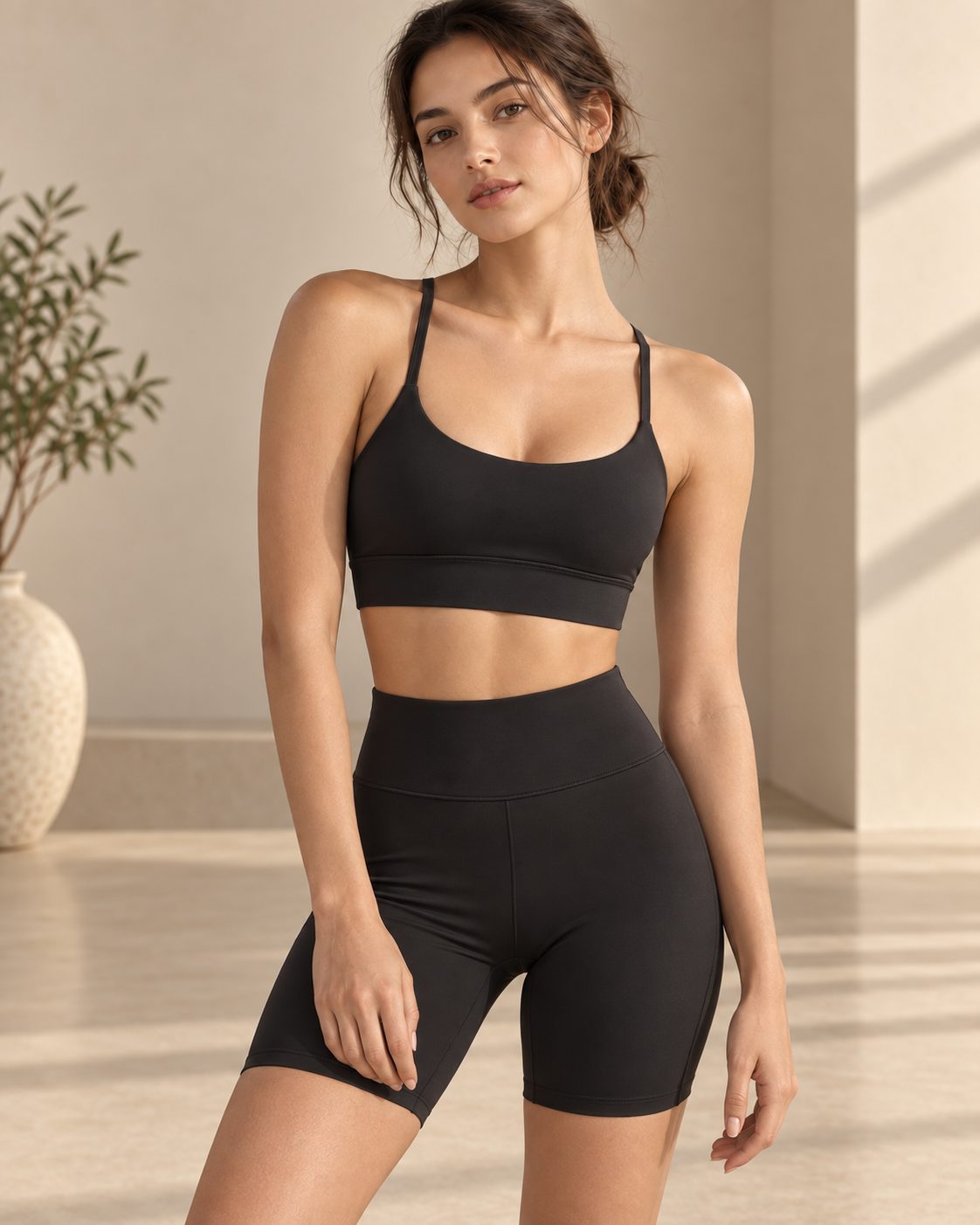
Most guides about sourcing activewear in China are written by people who have never stood on a factory floor. This one is different. I run Miss K, a sourcing and production coordination partner based in Guangzhou, which means I spend my weeks inside cutting rooms and sewing floors, checking samples and chasing timelines on behalf of brand founders in the US, Europe and Australia.
Over the past few years I have watched first-time founders make the same expensive mistakes again and again: choosing the wrong production route, wiring deposits to suppliers who could not answer basic fabric questions, approving samples from a photo on a phone screen, and ordering quantities their cash flow could not survive.
This guide condenses what I have learned into one place. It is long. Bookmark it, work through it in order, and by the end you will know exactly what to do - and what to never do - when you source your first yoga collection from China.
One honest note before we start: Miss K coordinates production through established manufacturing partners in Guangzhou rather than owning a factory. I wrote this guide from that position - close enough to the machines to know how the work actually gets done, and honest enough to tell you what suppliers will not.
What Sourcing from China Actually Looks Like in 2026
The China of 2026 is not the China of dropshipping threads and Alibaba horror stories. The manufacturing ecosystem around Guangzhou and the wider Pearl River Delta is the most developed activewear production cluster on earth. Fabric markets, knit mills, dye houses, accessory suppliers and sewing factories sit within a few hours of each other. That density is your advantage: short lead times, deep fabric libraries, and workers who have been sewing nylon-spandex for a decade.
It also means the gap between a good supplier and a bad one is enormous. For every precision workshop sewing four-needle six-thread flatlock seams, there are twenty traders with a sales deck and no machines. The market does not punish them quickly, because new founders keep wiring deposits without checking anything.
Your job as a founder is not to find the cheapest quote. It is to find a partner whose production reality matches what your brand needs at its current stage - and to verify everything before money moves.
Choose Your Production Route First
Before you contact any supplier, decide which of the three production routes fits your stage. Getting this wrong is the most common - and most expensive - early mistake.
Private label, ODM and OEM are not interchangeable and the differences decide your cost, your timeline and how much design work lands on your plate:
• Private label: you take proven, factory-developed styles and apply your branding, colors, labels and packaging. Fastest to market, lowest development cost, and the patterns have already survived real bodies. Ideal for your first collection.
• Semi-custom (ODM): you start from a base style and modify - waistband height, strap configuration, length, colors, fabric weight. You get differentiation without paying for full pattern development.
• Full custom (OEM): your tech pack, your patterns, your grading, developed from zero. Complete control, the longest timeline, and it only works if you have real technical drawings or a partner who can build them with you.
My honest recommendation for a first-time founder: start private label on core basics, prove what sells, then move your hero pieces into semi-custom or full custom once real sales data tells you what your customers actually want. I wrote a full walkthrough of this launch path in how to start a yoga wear brand with low MOQ.
How to Vet a Supplier Before You Send Anything
Deposits move on trust. Build the trust deliberately. Before any money changes hands, run the supplier through these checks:
• Ask them to explain fabric mechanics without a script. A real activewear specialist can tell you, unprompted, how a 75/25 nylon-spandex behaves differently from an 80/20, and what a 240 gsm knit does that a 200 gsm cannot. A trader will put you on hold. The full checklist lives in my guide to choosing a yoga wear manufacturer in China.
• Ask what happens when a style fails. Honest partners will tell you about a run that went wrong and how they fixed it. Suppliers who claim perfection are hiding their first shipment.
• Ask who sews your order. A partner coordinating production should tell you which factory, what capacity, and who is accountable if the line slips. A factory should show you its own floor - live, on a video call, mid-shift.
• Watch how they handle your questions during sampling. Speed matters less than clarity. A supplier who answers three of your five questions and ignores the other two will be worse when your money is already in their account.
• Verify the business entity. Get the registered company name, check it against the invoice, and make sure the account you wire to matches the company you are contracting with. This five-minute check prevents the oldest scam in the book.
Fabrics: What to Ask For and What to Avoid
Activewear lives or dies on fabric. The category standard for premium yoga wear is a nylon-spandex blend, typically around 75% nylon and 25% spandex, knit between roughly 200 and 260 gsm depending on the piece. If a supplier cannot tell you composition, spandex percentage and gsm for every style in their range, that is your answer about them.
Why nylon over polyester for yoga? Hand-feel and recovery. Nylon drapes softly, takes dye deeply, and pairs with 20-25% spandex to give that second-skin feel with snap-back recovery that will not bag at the knees by month three. Polyester has its place in high-sweat running gear, but on a yoga mat it usually feels slippery and holds odor. The full comparison is in my breakdown of nylon versus polyester for a yoga line.
Weight decides function. Around 200-220 gsm knits drape fluidly and suit tanks and layering pieces. Around 240-260 gsm gives you the density for squat-proof leggings and structured flare pants. Someone will try to sell you a 190 gsm compression legging - physics does not work that way, and your customers will be the ones who find out.
Always get physical swatches before approving anything, and test them in daylight. A swatch that feels heavenly on a desk can turn sheer the moment someone squats in front of a window. I wrote a whole guide on how to read a fabric swatch before you approve it.
The Sampling Stage, Step by Step
Sampling is where brands are made or lost. A proper sampling round runs about 5-7 days for a private label sample and one to three weeks for semi-custom or full custom, depending on how many revisions your design needs.
The sequence looks like this: you confirm styles, colors and branding details; the sample gets cut and sewn; you receive it and test it on real bodies - wash it, stretch it, squat in it, wear it for a full day; you send consolidated feedback in one list, not fifteen separate messages over two weeks.
Never approve a sample from photos alone. A photo cannot show you seam tension, interior finish, or how the waistband behaves after an hour of wear. And when feedback comes back, a good partner will acknowledge each point specifically and tell you how the pattern will change. If communication during sampling is chaotic, bulk will be worse.
The complete stage-by-stage process, including what happens between sample approval and bulk, is in my walkthrough of the activewear sampling process from tech pack to bulk.
MOQ: Planning a First Order That Will Not Strangle You
MOQ - minimum order quantity - exists for a simple reason: setting up a production run has fixed costs in fabric buying, cutting and line changeover. In yoga wear, typical MOQs run from about 800 to 1,000 pieces per color for most styles. Be suspicious of anyone promising 50-piece bulk runs at premium quality; the math does not survive contact with a cutting table.
Plan your first order around sell-through, not around the MOQ. The question is never "what is the cheapest per-piece price" but "can I sell through this inventory in a season." Cash stuck in unsold leggings is worse than paying slightly more per piece for a smaller, smarter run.
If you want the full mental model - why MOQs exist, how to split a first order across styles, and the questions worth asking any supplier before you commit - I covered it in what MOQ really means and how to plan your first order.
Quality Control Before Shipment
Whatever route you choose, someone must check the goods before they leave the floor. At minimum, a pre-shipment inspection should cover:
• Print and dye consistency across the run - this is where leopard prints show white at the seams and where "the same black" arrives as two different blacks. I documented both problems, and their fixes, in pieces on white show-through on printed activewear and why black leggings do not match black bras.
• Interior finishing: flatlock seams should sit flat with no tension bunching, waistbands should not dig, and bar-tacks should reinforce high-stress points.
• Measurement checks against the approved sample, in the middle of the run and again at the end - not just at the start.
• Packaging: folded size, polybag weight, and carton marks. Heat creases from bad packing have ruined more unboxing videos than any sewing defect.
If you work with a sourcing partner, this is much of what you are actually paying for: a person on the floor when it matters, not a forwarder with a checklist.
Timelines: From Deposit to Delivered
Realistic timing for a private label order: about 5-7 days for samples, then 15-25 days for bulk production after sample approval, then shipping time on top of that. Full custom development adds pattern-making and fit rounds before any of that - budget weeks, not days, if your design is genuinely new.
Two things quietly destroy timelines: late feedback and fabric availability. Consolidate your sample comments into one decisive list. And if your color is a custom dye, ask early how many days the dye lot needs - that number, not sewing, is usually the critical path.
Shipping and Logistics Basics
For first orders, most founders choose between air freight (fast, expensive, sensible for samples and urgent top-ups) and sea freight (slow, cheap per unit, the default for bulk). Ask your supplier or partner to prepare the commercial invoice, packing list and carton markings correctly the first time - customs delays cost more than freight.
Under 2 cubic meters, express air is often fine. Above that, get sea freight quotes early, because rates move seasonally. Confirm who books the forwarder and who owns the goods at each stage, in writing, before the cartons leave the factory.
Common Questions
Is sourcing yoga wear from China still worth it in 2026?
For technical activewear, yes - no other cluster combines fabric depth, sewing skill and speed the way Guangzhou does. The winners are founders who treat sourcing as a relationship, not a transaction.
Can I visit the factory before ordering?
You can, and serious suppliers will welcome it. If a visit is impossible, request a live video walk-through of the floor during production hours. Photos in a pitch deck prove nothing.
What documents should I get with my order?
Commercial invoice, packing list, bill of lading or airway bill, and - if requested in advance - fabric test reports from the mill. Ask for these before production starts, not after.
How do I protect my designs?
Practical protection in China is operational, not legal: work with partners whose business depends on reputation, split hero-piece production if volume justifies it, and remember that speed to market protects you more than paperwork.
Where to Start This Week
If you take one action from this guide, make it this: define your production route and your first-order budget before you contact anyone. Every good sourcing decision follows from those two numbers.
If you want a partner on the ground instead of another platform listing, that is exactly what we do at Miss K - private label, semi-custom and full custom programs, coordinated through established manufacturing partners in Guangzhou, with MOQs from 800-1,000 pieces per color and sampling in 5-7 days.
Write to info@misskyoga.com or message +86 136 4085 9182 on WhatsApp with your styles and quantities, and you will get a straight answer about what is realistic - including when the honest answer is that you do not need us yet.