Sep 14, 2026Material Science
Nylon vs. Polyester: Which Fabric Is Right for Your Yoga Line
Nylon or polyester for your yoga line? A sourcing partner breaks down hand-feel, odor, cost and color depth - and where spandex percentage changes everything.
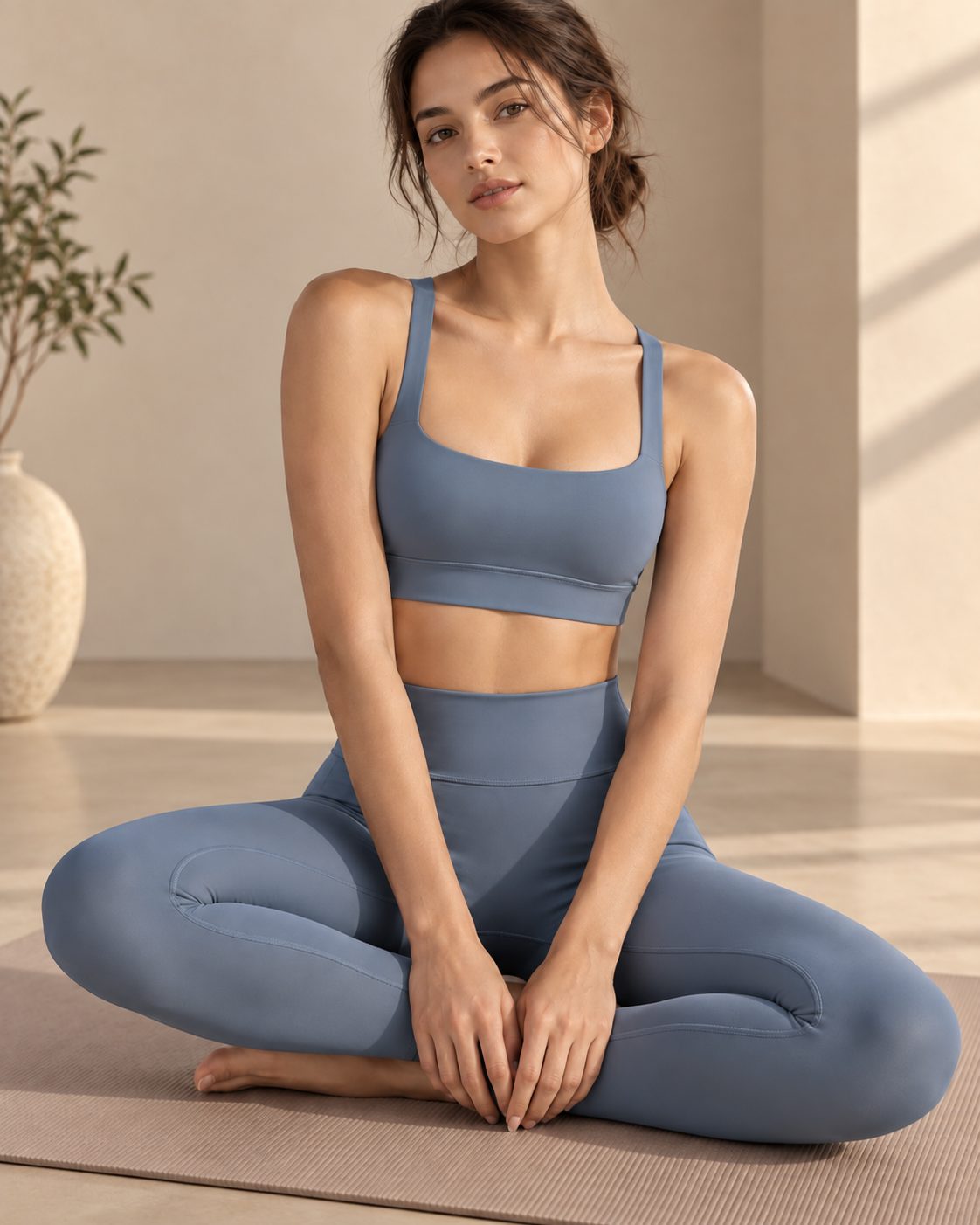
Two Fabrics, One Shelf
Walk down any activewear aisle and read the labels. Almost every premium pair of yoga leggings says the same two words: nylon and spandex. Almost every budget pair says polyester. The price gap between them is real, and so is the difference in how they feel on the body.
If you are building a yoga line and deciding where your fabric dollars go, this is the comparison worth understanding properly - not from a fabric salesperson, but from someone who handles both every week.
What Nylon Brings to the Mat
Nylon is the reason premium leggings feel the way they do. The fibers are soft, smooth and strong, and when they are knitted into a fine gauge fabric, the surface feels cool and almost liquid against the skin. That is the hand-feel customers mean when they say "buttery" - and it is the feeling that makes a customer pick one legging over another on a rack.
Nylon also takes dye beautifully. Deep blacks stay deep, sage tones read clean, and the color holds through wash after wash. For a brand building a reputation on color consistency, that matters more than most founders realize at the start.
The trade-off is cost. Nylon yarn costs more than polyester, and that difference flows through to your garment price. For a premium line, it is a cost worth carrying. For a promotion-driven basics brand, it might not be.
What Polyester Does Well
Polyester has its own strengths, and pretending otherwise does not help anyone.
It wicks moisture quickly and dries fast, which is why so much running and high-sweat training gear is built on it. It holds its shape through a lot of washing. And it costs less, which keeps the final garment at a price point some customers are looking for.
But for yoga specifically, polyester has two habits worth knowing. First, the hand-feel: even in a fine knit, it tends to read slightly slick or plastic against the skin rather than soft. Second, it holds odor. Anyone who has owned polyester training tops knows the laundry-bag smell that survives the wash.
For running gear, those trade-offs can make sense. For yoga and pilates - where the fabric spends an hour pressed against skin, stretched through deep folds and held against the mat - most brands that try all-polyester construction come back to nylon blends within a season or two.
Where Spandex Fits In
Neither nylon nor polyester stretches on its own. The stretch comes from spandex, and the percentage changes everything about how a garment behaves.
Our yoga and pilates range is built on roughly 75% nylon and 25% spandex. The nylon gives the soft hand-feel and durability; the spandex delivers four-way stretch and the recovery that keeps knees from bagging and waistbands from rolling. Drop the spandex content and the fabric gets cheaper but loses its snap - leggings that start the day compression and end it sagging.
Weight matters here too. Lighter knits around 200 to 220 gsm suit tops, tanks and layering pieces. Denser knits from 240 to 260 gsm give leggings their compression, opacity and structure. The right answer depends on the style, not on a single magic number.
So Which Should Your Line Use?
If you are building a premium yoga or pilates line and your customers care about hand-feel, drape and how the fabric ages - nylon-spandex is the honest answer. It is what nearly every premium brand on the market uses, and for good reason.
If you are building a high-sweat training line where wicking matters more than hand-feel, or a price-driven basics range, polyester constructions have a real place.
Many brands end up with both: nylon-spandex for the yoga and studio pieces, polyester blends for the high-sweat training capsule. That is a sensible split, and it is how we often structure ranges with the brands we work with.
At Miss K, our development work centers on nylon-spandex fabrics across our 8-style reference range, with weights from 200 to 260 gsm in Black, Espresso, Cream, Sage and Blue Grey. If you want to feel the difference on your own skin before you commit, we are happy to arrange samples. Reach us at info@misskyoga.com or WhatsApp +86 136 4085 9182, or browse the reference styles on our products page first.