Sep 20, 2026Material Science
Yoga Fabric Guide: Nylon, Spandex and GSM Explained
What actually decides how yoga fabric feels and performs: fiber choice, spandex percentage, gsm weight and finishing - explained from a sourcing desk in Guangzhou, not a marketing page.
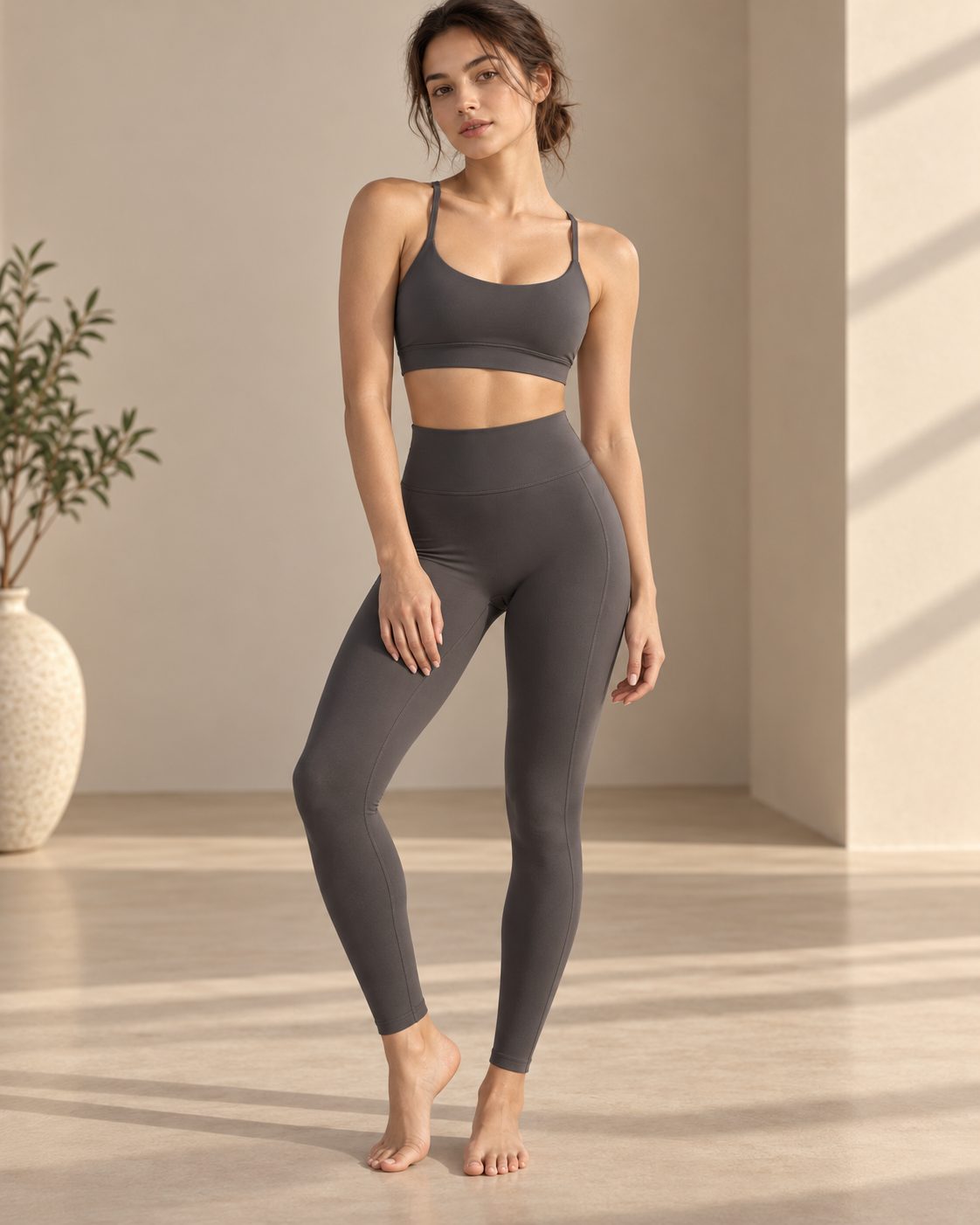
Pick up two pairs of leggings with the same fabric label - say, 80% nylon, 20% spandex - and one can feel like a premium second skin while the other pills, sags and goes sheer within a month. The label tells you almost nothing. What matters is the knit construction, the yarn quality, the finishing and the density, and almost no brand explains any of it.
I work on the sourcing side of this industry in Guangzhou, which means I spend a lot of time with fabric vendors, knit cards and dye lots. This guide is the explanation I give founders when they ask what they should actually be looking at. No buzzwords - just the five factors that decide whether a fabric is worth putting your brand name on.
The Three Fibers Compared: Nylon, Polyester and Cotton Blends
Nylon dominates premium yoga wear for good reasons. It has the softest hand-feel of the synthetic fibers, it drapes close to the body without clinging awkwardly, and it takes dye deeply, so colors stay rich. Paired with spandex it gives you that smooth, cool-to-the-touch feel that people pay premium prices for.
Polyester is the workhorse of budget activewear and technical running gear. It wicks hard and dries fast, but on a yoga mat it typically feels slippery rather than soft, it traps heat in warm studios, and it tends to hold odor through repeated wears. It is also cheaper - which is exactly why fast-fashion leggings use it. I compared the two fibers in detail for line-planning purposes in my piece on nylon versus polyester for a yoga line.
Cotton blends feel natural and breathe well, but they absorb sweat, get heavy, and lose shape quickly. For hot yoga or reformer pilates they are the wrong tool. Cotton-canvas-style fabrics show up in streetwear-adjacent pieces, not in performance basics.
Spandex Percentage: Why 20-25% Is the Sweet Spot
Spandex - the same fiber sold under the names elastane and Lycra - is what makes activewear behave like activewear. People assume more spandex means more stretch. Not quite. What high-grade spandex provides is recovery: the knit snaps back to shape instead of bagging at the knees and slumping at the waistband.
In practice, compression bottoms sit best in the 20-25% range, usually paired with nylon. Drop to 10-15% and you save on yarn cost but the garment loses its hold - customers feel it by the afternoon. Push past 30% and you get a tight, almost rubbery compressive feel that suits a specific training niche, not all-day studio wear.
The names confuse people, so to be clear: spandex, elastane and Lycra all describe the same fiber - Lycra is a brand name. What separates premium from budget is the grade of the spandex and how it is heat-set into the knit, which I unpacked in my piece on spandex, Lycra and elastane.
GSM: The Number That Decides Opacity and Compression
GSM means grams per square meter - the weight of the fabric. In yoga wear it is the single most useful number on a spec sheet, because it predicts how a garment behaves before anyone puts it on.
Around 200-220 gsm, knits feel light and fluid. They drape beautifully for tanks, layering tops and camis. Use that weight for bottoms and you are asking for trouble: light knits go sheer under tension, which is a polite way of saying your customers will be visible in a squat.
Around 240-260 gsm, you get the density that compression leggings, flare pants and structured pieces need. The fabric smooths instead of clinging, holds clean lines, and stays opaque in deep stretches. This is the weight range we build our reference leggings on.
When a supplier quotes you a weight, also ask how they measure it - and remember that finish matters as much as raw weight. Two 250 gsm knits can feel completely different depending on heat-setting and brushing. A useful rule: if a supplier cannot tell you the gsm of a style from memory, they do not know their own product.
The Composition Myth: Why Identical Labels Feel Different
Here is the uncomfortable truth about fabric labels: composition is maybe a third of the story. The same 75/25 nylon-spandex can be knitted tight or loose, finished hot or cold, and singed or left fuzzy. Same label, completely different garment.
Knit construction decides stretch direction and support. Finishing decides hand-feel - that brushed, peach-skin surface versus a flat synthetic one. Heat-setting decides recovery: skip it or rush it and even a great knit will bag. I broke down this exact phenomenon - two leggings, same label, different everything - in the myth of fabric composition.
Practically, this is why sample approval matters more than spec sheets. The spec tells you what the supplier intended; the sample in your hands tells you what they actually knitted.
Hand-Feel: What "Buttery Soft" Actually Means
"Buttery soft" has become the most exhausted phrase in activewear marketing, which is a shame, because the underlying sensation is real and measurable. That deep-soft, second-skin feel comes from three things: fine yarn count (thinner filaments), a dense, even knit, and mechanical finishing that raises a micro-fuzz on the surface.
It is also the easiest thing to fake in a sample and lose in bulk. A supplier can hand-finish a golden sample beautifully, then skip the finishing step on the production run. This is why your pre-shipment check must include hand-feel against the approved sample, not just measurements. I covered the science and the failure modes in the science of second-skin activewear.
One related trap: the sourcing trend-chasing that produced the whole "naked feel" category. A fabric can feel heavenly on fingertips and still fail everywhere else. My colleague's field guide on sourcing premium yoga fabrics beyond the naked feel walks through the daylight squat test and the stretch-recovery pull - two checks you can run without a lab.
Color, Dye Lots and the Things That Quietly Go Wrong
Color is where sourcing problems hide, because everything looks fine in the factory's lighting. Three failure modes to know:
• Dye lot variation: the same black dyed in two lots is two blacks. When leggings and bras come from different dye lots, customers notice. Ask how a supplier keeps sets consistent - the answer involves single-lot ordering and set-dyeing, which I explained in why black leggings do not match black bras.
• Print show-through: on printed styles, the wrong needle size or stitch density pushes white yarn through the print at the seams. It is fixable at the machine level, before the run, not after.
• Light-colored discipline: cream, sage and pale blue-grey knits need tighter yarn control than black. Any flaw in the yarn shows. If a supplier's light colors look chalky or uneven in the swatch stage, believe the swatch.
Testing Fabric Before You Commit
You do not need a lab to screen a supplier's fabric. You need a window and your hands:
• The stretch-and-recovery pull: stretch a panel hard, hold five seconds, release. It should snap back flat and immediately. Ripples mean baggy knees in three months.
• The daylight squat test: dark room, bright window, real body, deep squat. Whatever you can see through the knit, your customers will see in a parking lot.
• The wash cycle: wash the sample twice before you approve anything. Shrinkage, color bleed and finish loss all show up by the second wash. Full care-and-testing details are in my guide to reading fabric swatches, what to check before you approve a swatch, and in the yoga wear care guide you can share with your own customers later.
Our Reference Fabric Specs
For transparency, the fabric family we build the Miss K reference range on: a nylon-spandex blend of approximately 75% nylon and 25% spandex, sampled between roughly 200 and 260 gsm depending on the piece - lighter weights for camis, tanks and layering, denser weights for leggings, shorts and flare pants. Colors run in five core shades: black, espresso, cream, sage and blue grey, chosen because they mix and match into full collections.
Those numbers are not magic. They are simply the range where opacity, compression and comfort stop fighting each other, proven across many production runs. If a supplier steers you far outside it, ask them to explain exactly why - and make them prove it with a physical sample, tested in daylight, washed twice.
Common Questions
What fabric do most premium yoga brands use?
Nylon-spandex in the 70/30 to 75/25 range dominates premium yoga and pilates wear. The label is the starting point, not the guarantee - knit density and finishing decide the rest.
Is higher GSM always better?
No. Heavier means more opaque and more compressive, but also warmer and less fluid. Match the weight to the garment: 240-260 gsm for bottoms, 200-220 gsm for tops and layers.
How many washes before yoga leggings wear out?
A well-made nylon-spandex legging holds shape and color through years of normal washing. Heat is the enemy - cold wash, no fabric softener, air dry, and the recovery will outlast the trend cycle.
Can I get custom colors on a private label order?
Usually yes, within the MOQ. Custom dyeing typically needs a larger run than stock colors - ask your supplier how the MOQ changes before you fall in love with a Pantone chip.
What to Do With This
Take this guide into your next supplier conversation and ask the questions no one asks: knit construction, finishing steps, dye lot handling, gsm per style. The supplier who answers easily is your partner. The one who dodges just filtered themselves out.
If you would rather skip the guesswork, our reference range at Miss K is built on the exact specs above - private label, semi-custom and full custom, MOQ 800-1,000 pieces per color, sampling in 5-7 days. Reach us at info@misskyoga.com or on WhatsApp at +86 136 4085 9182, and ask for swatches. Physical ones. We insist on it too.