Sep 20, 2026Services Overview
OEM vs. ODM vs. Private Label for Activewear: Which Manufacturing Route Fits Your Brand?
Kate Chan breaks down OEM, ODM, and private label manufacturing for activewear, helping brand founders match their design capabilities and budget to the right production route.
The Cutting Table Reality
Every week, inquiries land in my inbox from founders who want to start or expand an activewear label. A good portion of them use OEM, ODM, and private label as if they mean the exact same thing.
They do not.
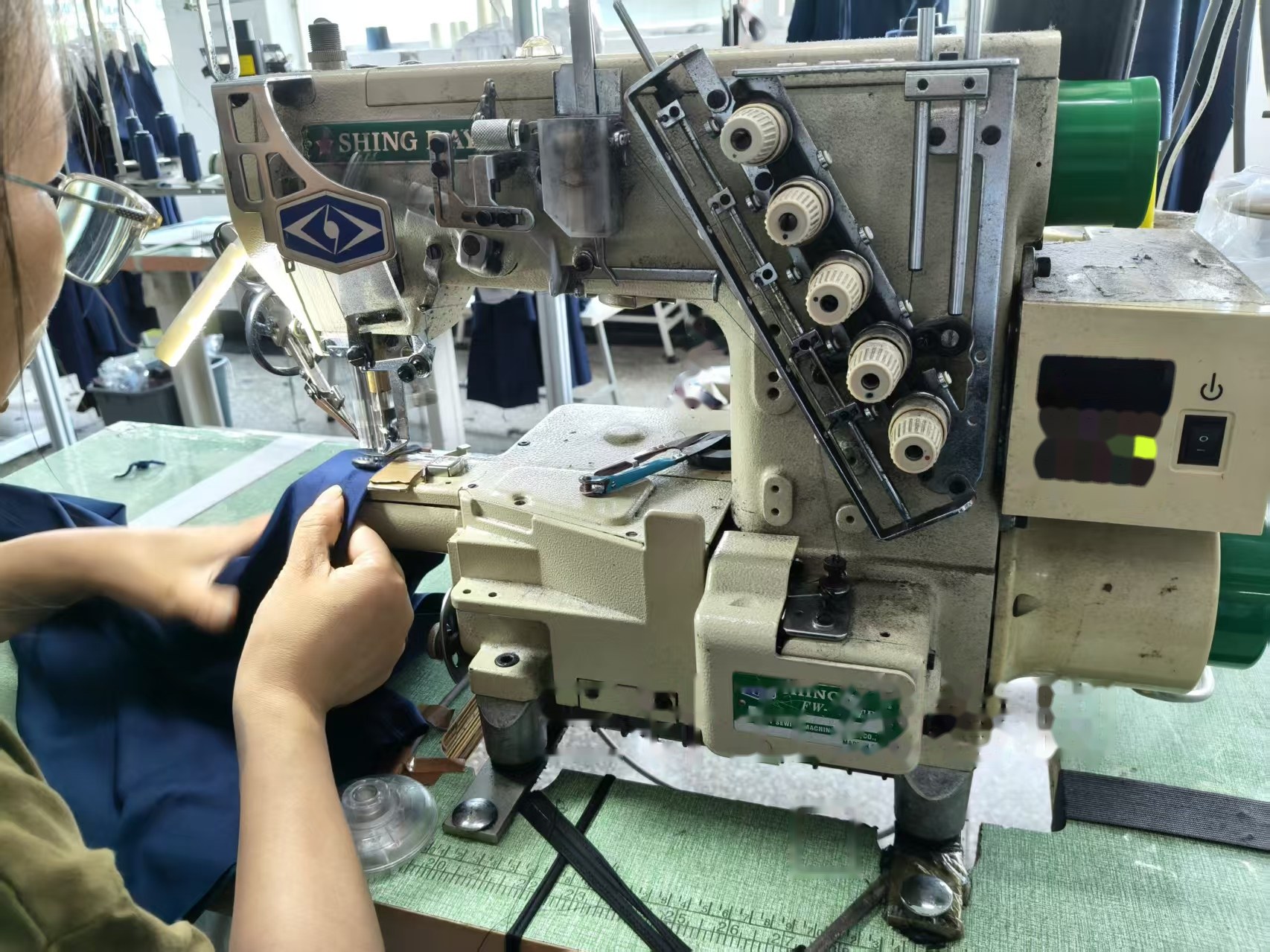
Out on the cutting floors of the partner factories we work with here in Guangzhou, those three letters dictate everything about how a morning runs. They determine whether the pattern maker is drafting a brand-new rise from scratch on brown paper, whether the sample room is adjusting an existing block, or whether the heat-transfer machine is simply applying a brand logo onto a legging design we already spent months perfecting.
Choosing the wrong route does not just cost money. It drains your patience before you ever ship a parcel to a customer. Activewear is unforgiving. Unlike a loose cotton graphic tee, activewear lives against bare skin, stretches across joints under load, and has to hold up through repetitive friction and hot laundry cycles. The manufacturing method you pick must match the practical reality of what your team can handle right now.
Here is how each model works from the supply side, and how to decide which one belongs in your production plan.
Private Label: Speed and Proven Blocks
Private label activewear means you take styles a manufacturer has already designed, fitted, and graded, and you apply your own branding to them. You choose the colors from the supplier's palette, select your logo placements, add your woven care tags or heat-seal prints, and package the goods in your custom polybags.
For many founders, there is an urge to look down on private label, as if using an existing silhouette makes the brand less legitimate. That is a mistake.
Good activewear patterns take an immense amount of trial and error to get right. When you build a tight from scratch, you usually go through three or four rounds of fit samples just to stop the waistband from flipping down during a forward fold or to prevent drag lines around the crotch. With private label, the supplier has already absorbed that pain.
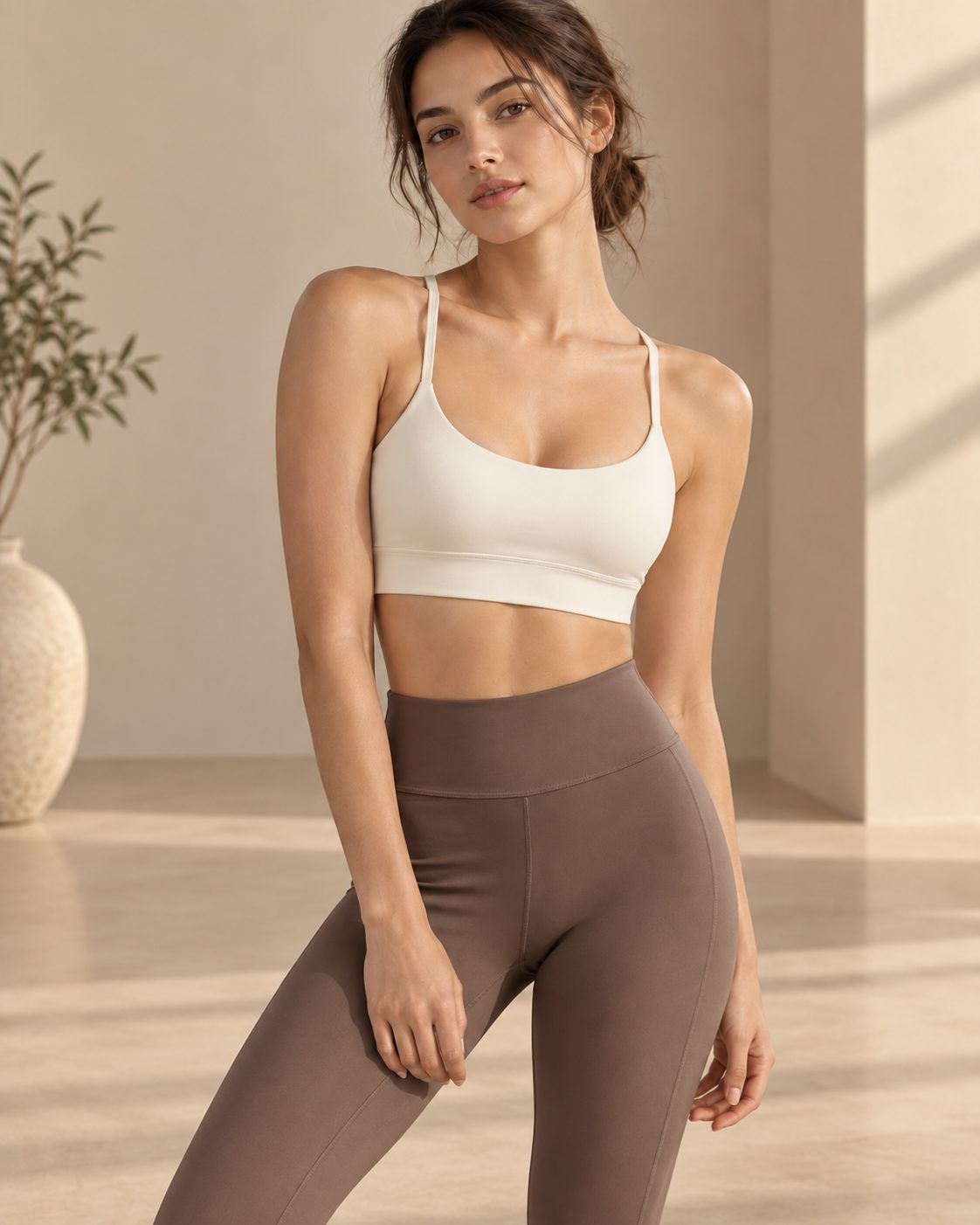
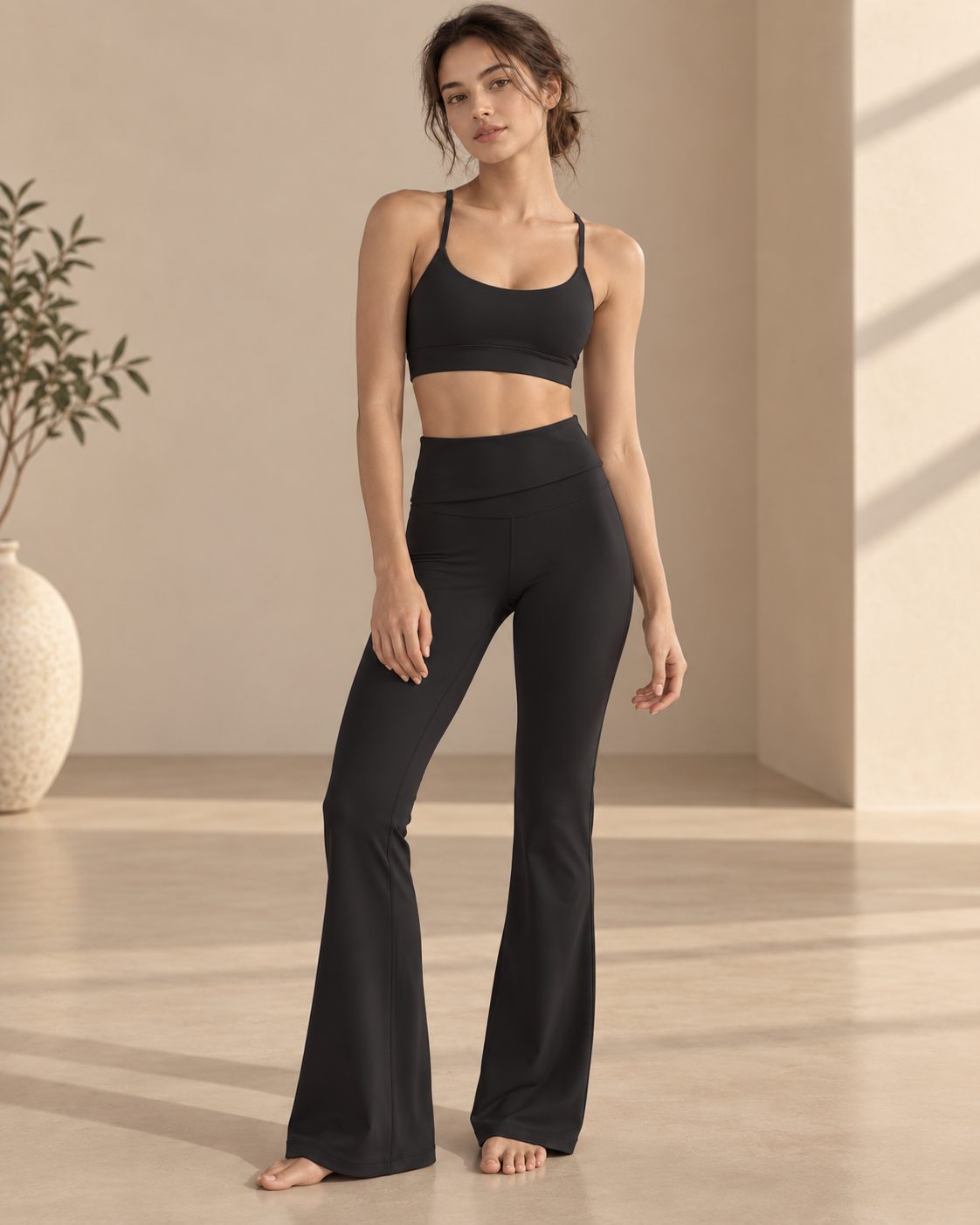
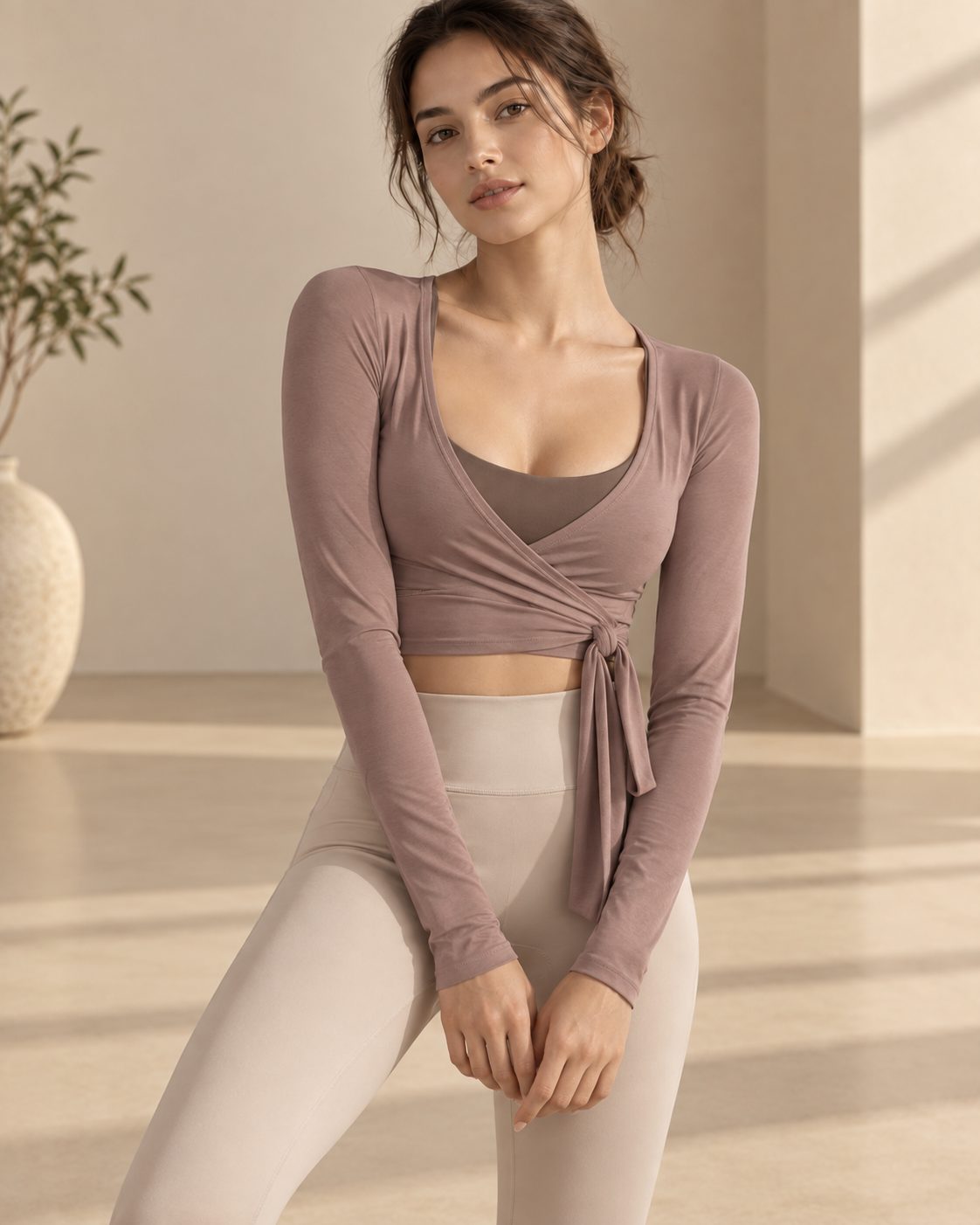
For our 2026 hero range at Miss K, we spent months tuning eight specific styles so labels can take them straight to market without touching a tech pack:
• No-front-seam leggings
• Foldover flare pants
• Square-neck longline bra
• Cami tank with shelf bra
• Sculpt leggings
• Straight/wide-leg pants
• Ballet wrap long sleeve
• Biker shorts (5-6 inch)
We run these in balanced nylon-spandex blends, around 75% nylon and 25% spandex, using sampling weights roughly between 200 and 260 gsm. That weight range gives enough density to stay squat-proof without feeling thick or suffocating on a pilates reformer. We keep them matched to classic, calm tones: Black, Espresso, Cream, Sage, and Blue Grey.
The benefit here is direct: it offers the fastest launch timeline and the lowest development cost. You do not spend months waiting on pattern adjustments, nor do you pay pattern-drafting fees.
The compromise is differentiation. Because the core pattern belongs to the factory's catalog, another brand could theoretically use a very similar silhouette. You are relying on your color choices, your brand voice, your photography, and your community building to set yourself apart. For emerging labels testing product-market fit, that is usually a trade worth making.
OEM: Absolute Control for Technical Teams
OEM stands for Original Equipment Manufacturer. In an OEM agreement, you bring the blueprints.
You provide the comprehensive tech pack: exact graded measurements for every size, detailed seam constructions (such as four-needle six-thread flatlock stitching versus clean-finish bonded edges), raw material specifications, stitch-per-inch counts, and exact tolerances. The factory's job is simply to follow your blueprint to the millimeter, cut the fabric, stitch the seams, and hand over finished garments that match your technical drawings.
OEM gives you complete control over your product. If you have spent years developing an arched back-yoke seam that lifts the glutes in a proprietary way, or an unusual strap configuration that supports larger cup sizes without digging into the trapezius, OEM is the only way to build it. Nobody else will have your exact fit.
The catch is that OEM places the entire burden of design and technical development on your shoulders.
I often see young brands attempt OEM when they do not yet have an in-house technical designer. They send us a photo of a competitor's legging taken off Instagram, paired with a rough sketch and a note saying: "Make this, but softer and more flattering." That is not OEM. That is a recipe for frustration on both sides.
Without a precise tech pack, a factory has to guess your intent. When the first sample arrives and does not fit your body model properly, you cannot pinpoint whether the issue lies in the front rise slope, the leg opening circumference, or the elastic recovery of the thread. OEM requires technical literacy, deeper development budgets, and patience, because you will inevitably go through multiple sample revisions before hitting production approval.
ODM: Letting the Factory Fill the Gaps
ODM stands for Original Design Manufacturer. It sits directly between the ready-made nature of private label and the strict technical demands of OEM.
In an ODM setup, you come to us with a concept, a moodboard, or functional performance requirements, but the manufacturing partners do the heavy lifting on the pattern drafting, grading, and material sourcing.
You might tell us: "We want a ribbed studio unitard with light compression for low-impact yoga, an open back, and an ankle-grazing inseam that flatters a taller silhouette." You do not have a graded spec sheet or a finished digital pattern file. Instead, the pattern makers in Guangzhou translate your creative intent into a physical garment.
ODM is ideal for brands that have a clear visual identity, distinct customer needs, and a strong sense of aesthetic direction, but lack dedicated technical pattern makers on staff.
It lets you bring unique, customized activewear to life without needing to calculate grade rules across five sizes. The development process takes longer than private label and costs more in sampling fees, but it moves quicker than full-scale OEM because the factories work within the realm of machinery, attachments, and fabric behaviors they already understand intimately.
How Sensible Activewear Brands Actually Build
Founders often feel pressured to choose one route and stick to it forever. The most grounded brands I work with do not think that way. They treat production as an evolving system.
A very practical approach is to begin with private label. You select five or six core pieces, say, a dependable no-front-seam legging, a square-neck bra, and a pair of foldover flare pants in classic tones like Espresso or Black. You put your branding on them, get them into the hands of real movers, and listen carefully to your customers.
You find out if your audience prefers higher compression or a softer brushed hand-feel. You see which sizes move first. You learn whether your customer base actually buys studio tanks or prefers longline bras. You do this without tying up development capital or spending half a year fine-tuning patterns.
Once you have consistent cash flow and clear customer data, you can expand strategically. Keep your core basics running on private label, and shift your true hero pieces into ODM or OEM.
When you know without a doubt that your community wants a specialized wrap top or a highly technical pocket legging, you invest the time and capital into developing that specific piece from scratch. You let your proven sellers finance your design experiments.
Activewear is an intimate product. When a pair of leggings slides down during a pilates workout or an elastic band cuts into the ribs, your customer remembers. Whether you use ready-made blocks or bring your own tech packs to the production tables, pick the route that matches your current operational bandwidth. There is no shame in starting simple; the only mistake is choosing a route that delays you from getting your garments into the studio.
If you are sorting through your range plans and need an honest opinion on which path makes sense for your styles, reach out to us at info@misskyoga.com or take a look through our products page. We are always happy to discuss fabrics, seam construction, and how to bring your collection to life.