Oct 16, 2026Material Science
How to Start a Yoga Wear Brand with Low MOQ
A founder's walkthrough of launching a yoga label in 2026: picking 8 core styles, understanding nylon-spandex blends, and planning a first order around sell-through.
Start with 8 styles, not 40
The biggest mistake I see from first-time founders is trying to launch a "complete collection." Bras, leggings, jackets, shorts, onesies, matching sets in twelve colorways. I get it - you want the website to look full. But here's what actually happens: your bestseller sells out in week three, your worst seller sits in a warehouse for two years, and your cash is stuck in both.
When we built our 2026 hero range at Miss K, we deliberately kept it to eight styles. Four we treat as priority A, the pieces almost every brand needs on day one:
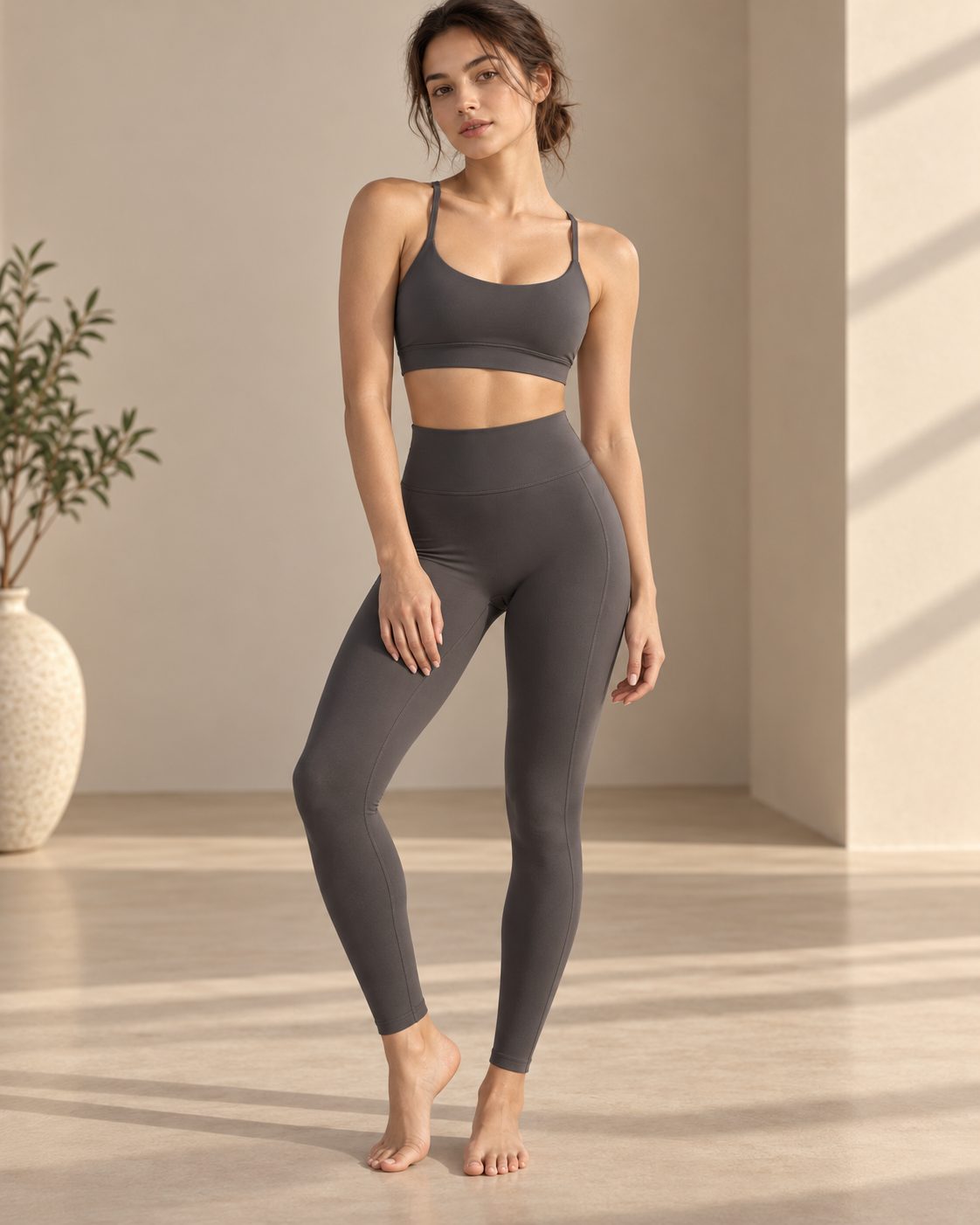
• No-front-seam leggings. Clean front line, high waist, nothing to rub or dig during long studio sessions.
• Foldover flare pants. The studio-to-street silhouette that photographs beautifully and keeps selling through the year.
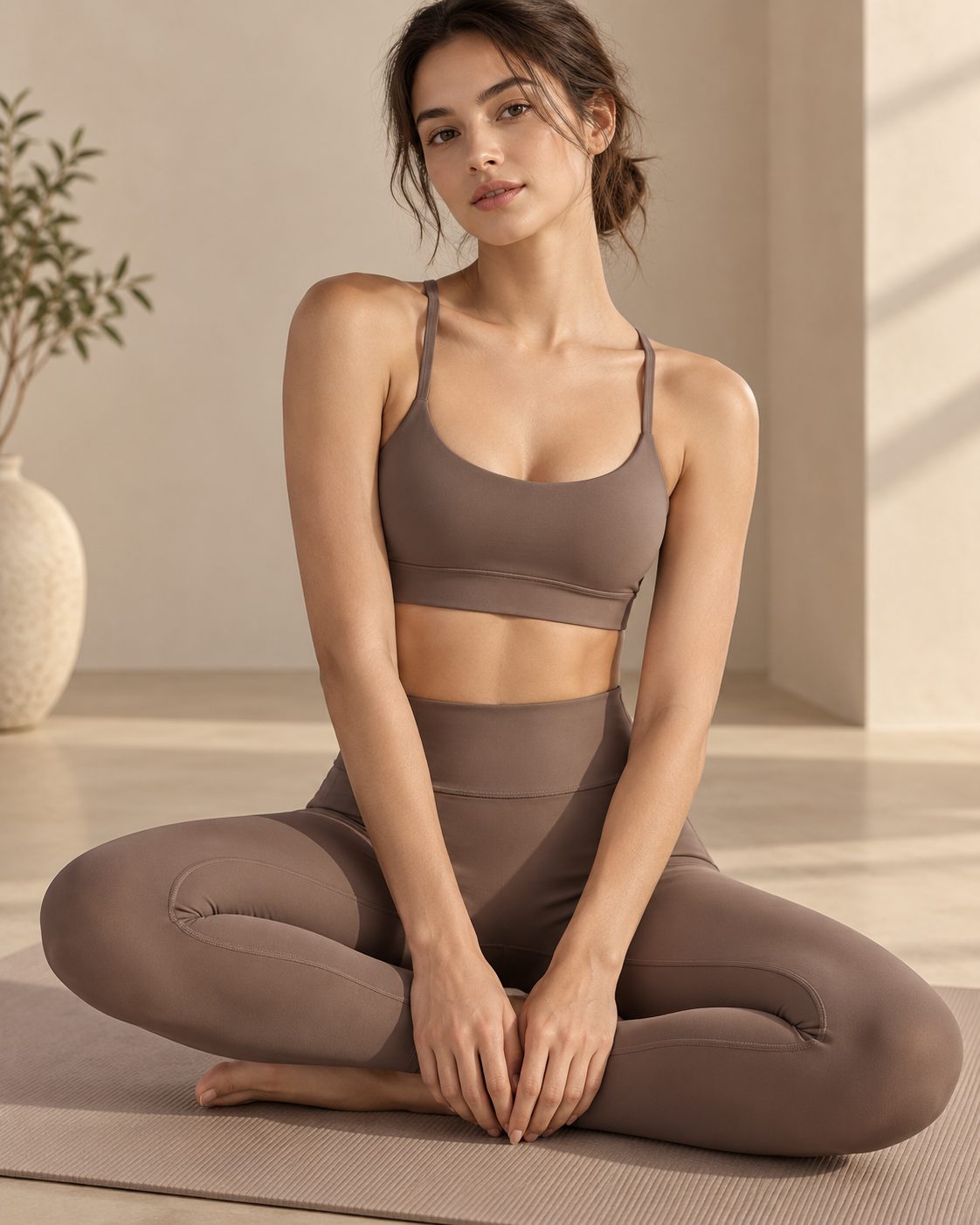
• Square-neck longline bra. It works as a set builder, which matters more than people realize. Sets sell.
• Cami tank with a shelf bra. Minimal, feminine, and it covers the "I want something that isn't a sports bra" customer.
Then four priority B styles to round things out: sculpt leggings with a crossover waist, straight and wide-leg pants, a ballet wrap long sleeve, and a pair of 5-6 inch biker shorts. That's it. Eight styles, five colors, black, espresso, cream, sage, and a blue grey, and you have a collection that looks intentional instead of overwhelming.
One of our clients launched with almost this exact structure. Not because we told them to, but because eight SKUs is something a growing brand can actually sample, shoot, and restock.
Learn just enough fabric to not get fooled
You don't need to become a textile engineer. But you do need to hold your ground when a supplier tells you something odd.
Ninety percent of premium yoga wear comes down to one blend: nylon and spandex, usually in a 75/25 or thereabouts. The nylon gives you that soft, "buttery" hand feel; the spandex gives you recovery, so the leggings you loved in week one still hug in month six. Our sampling targets for the hero range sit between roughly 200 and 260 gsm depending on the style, lighter for camis and layering pieces, denser for compression leggings and flare pants.
Two quick tests you can do at the sampling stage, no lab required:
• The stretch-and-recovery test. Pull the fabric hard, let it snap back. If it doesn't return to shape immediately, walk away.
• The squat test in daylight. Put the sample on, squat in front of a window. If you can see skin through it, your customers will see it too, and they will post about it.
If a supplier can't tell you the gsm of their fabric off the top of their head, that's a signal. Good factories know their numbers cold.
Plan your first order around sell-through, not the lowest MOQ
Here's something worth hearing before you chase the smallest possible minimum order: obsessing over rock-bottom MOQs is the wrong game. What matters is whether your first order sells through - because sell-through is what funds your second order, and your second order is where the real business starts.
Our own production programs run at flexible minimums per style and color. That is not an arbitrary concession; it is how we match quantity to where quality, pricing and scheduling stay honest for both sides. Within that frame, you still control your risk the same way: launch the full range in your core colors, watch which styles move, and concentrate your reorders on the winners instead of spreading budget across every option.
A focused first order at a workable MOQ beats a giant order at a discount you can't sell through. The brands that grow treat their first production run as a test they can afford - and their reorders as the investment round.
The actual launch sequence
Here's the order I'd do things, having watched dozens of brands go through it:
• Pick your core styles from a supplier's developed range and request samples. Touch everything. Wash everything. Squat in everything.
• Choose 3 to 5 colors max for launch. Our five standard colorways exist because they cover most of what customers actually buy. That sage green is lovely, but black pays the bills.
• Shoot your product photos on real bodies. Stock renders convert terribly in activewear because customers are buying fit and feel.
• Start with a first production run of your full range, watch which styles move, and restock the winners aggressively while letting the losers go. This is the entire game.
• Once you have two or three proven styles, that's the moment to invest in full custom development: your own patterns, your own fabric spec, maybe your own colorway. Not before.
One last thing
The brands that make it aren't the ones with the biggest launch. They're the ones who could afford to be wrong on their first order. And almost everyone is wrong on their first order, by the way. A focused range, an honest MOQ and a supplier who tells you the truth - that combination outruns a big budget every time.
If you want to see what a focused starting range looks like, our 2026 hero style selection is on the products page, eight styles, sampling-ready. And if you'd rather just talk through your launch with a person, my inbox is open at info@misskyoga.com, or WhatsApp at +86 136 4085 9182. I answer those myself.