Oct 31, 2026Craftsmanship & Quality
Sports Bra Straps and Closures: The Engineering Behind Support That Lasts
Straps and closures decide whether a bra's support survives real workouts. The back styles compared, closure options, the hardware quality checks, and how to spec each detail in your tech pack.
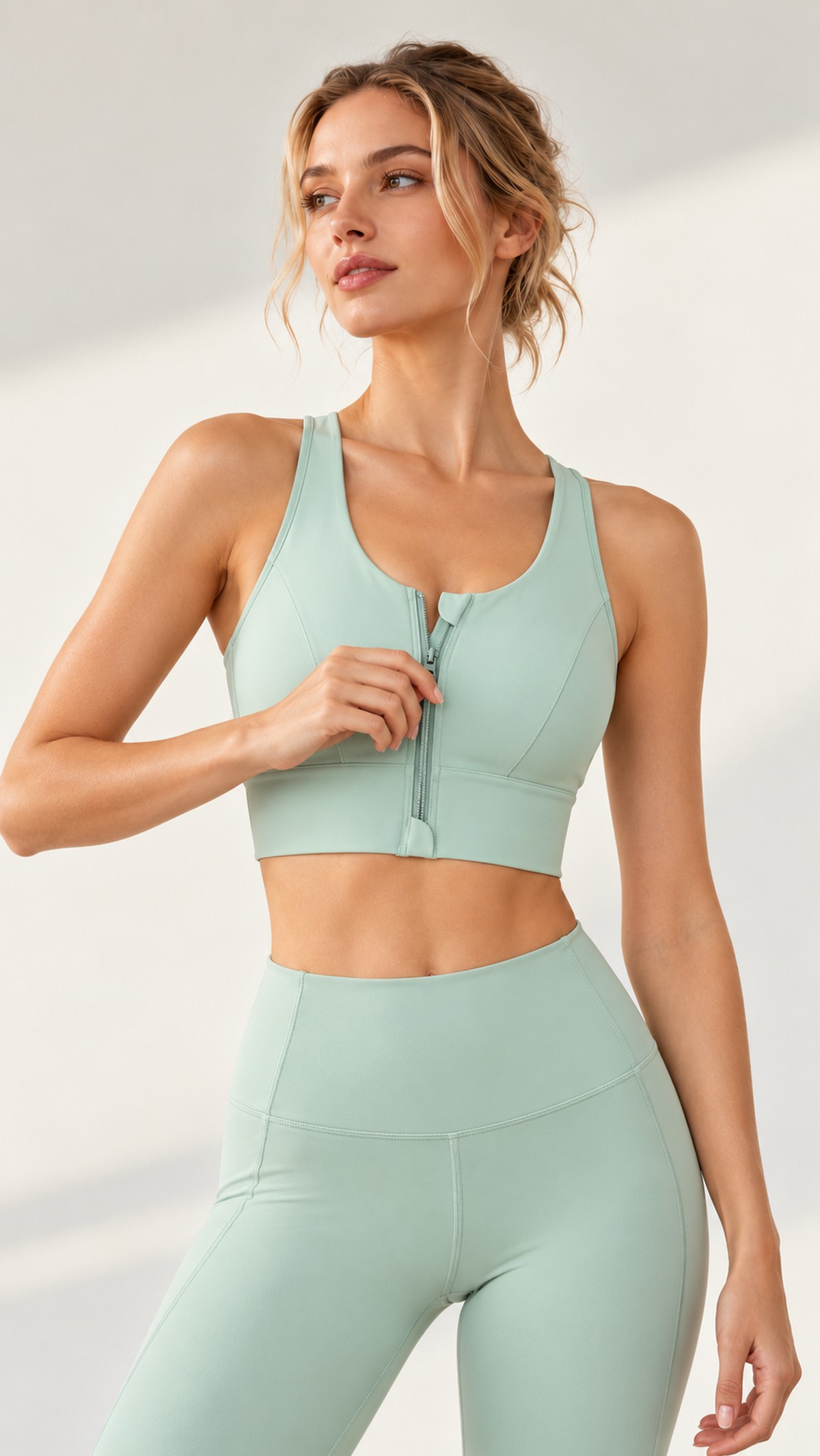
Two bras can use the same fabric and cup pattern and perform completely differently - because the straps and back construction carry most of the load. Customers feel the difference as dig-in, ride-up, or a band that creeps up during burpees; they see it as the back detail that makes them pick one style over another. Straps and closures are engineering, and here is how to spec them deliberately.
The Back Styles, Compared
Classic cami back - adjustable parallel straps
The most adjustable and the most forgiving across body types: independent straps with sliders let each customer set her own tension, and sizing is easiest to grade. Trade-off: parallel straps can slip off shoulders during overhead movement unless the back arc is cut correctly. Best for light-to-medium support and everyday styles.
Racerback
Straps converge between the shoulder blades, locking them against slip-off and engaging the back panel in load sharing - visibly better for high-impact, and the reason most running and training bras use it. Trade-offs: harder to dial in per-body tension (less adjustment), and the convergence point concentrates load where workmanship matters most.
Cross-back and decorative cuts
Fashion-forward straps - criss-cross, halter, asymmetric - photograph beautifully and sell on style. Structurally they change load paths: a halter dumps weight onto the neck, cross-backs pull diagonally. They work when the band and undercup carry the load and the straps only position - pair them with firmer bands and skip them for high-impact claims.
Closures: Pullover, Back Clasp, or Front Zip
Pullover
Cleanest look, lowest cost, no hardware to break - and the hardest to put on and take off when sweaty. Standard for light and medium support.
Back clasp
Row-and-hook closures add adjustability across the band's life and make dressing easier. The failure points are the hooks themselves: cheap findings bend, and stitching boxes around them puckers. A quality clasp with a reinforced stitching box is cents more and survives hundreds of cycles.
Front zip
The premium Athleisure move - our own front-zip compression bras exist because a front closure is genuinely easier post-workout and photographs like hardware on a jacket. The engineering bar is highest: the zip needs a garage at the top so it cannot jab the sternum, a placket that lies flat, and a zipper tested for sweat corrosion. Done badly it is a return magnet; done well it is a signature.
Hardware and Stitching: The Checks That Matter
Sliders and rings
Plastic hardware should be nylon (not brittle PS), sized so the strap cannot slip through when the slider is at maximum length, and tested to hold under load without cracking at cold temperatures - gym bags get cold.
Strap elasticity
Fully elastic straps feel soft but creep under load; stable-to-back straps with elastic only at the adjustment section hold position longer. High-impact styles usually want the hybrid.
Bartacks at every junction
Strap-to-cup, strap-to-band, clasp boxes, racerback convergence: each is a point load, and each gets a bartack. The bartack discipline is the same one that reinforces gussets - two seconds of stitching that decide whether the bra survives its first hundred workouts.
The Fit Checks Before Bulk
Bounce test on a fit model at the target impact: straps should hold without re-adjustment for a full session. Dig-in check: red marks at the shoulder after 30 minutes mean width or elasticity is wrong - widen the strap before touching the pattern. Slider cycle test: adjust ten times and look for strap twist. And photograph the back - the back detail is what the customer sees in the mirror and in your product photos, so it has to look as good as it performs.
What to Write in the Tech Pack
Specify strap width at rest and under stretch, back style with a flat sketch, hardware material and size, closure type with reinforcement requirements, and bartack positions. The tech-pack discipline applies fully - one line per element prevents most sampling rounds.
Developing bras and want the details engineered up front? Send us your reference styles - we will map straps, closures and hardware, quote the construction honestly, and fit-test at your target impact level before bulk. info@misskyoga.com or WhatsApp +86 136 4085 9182.