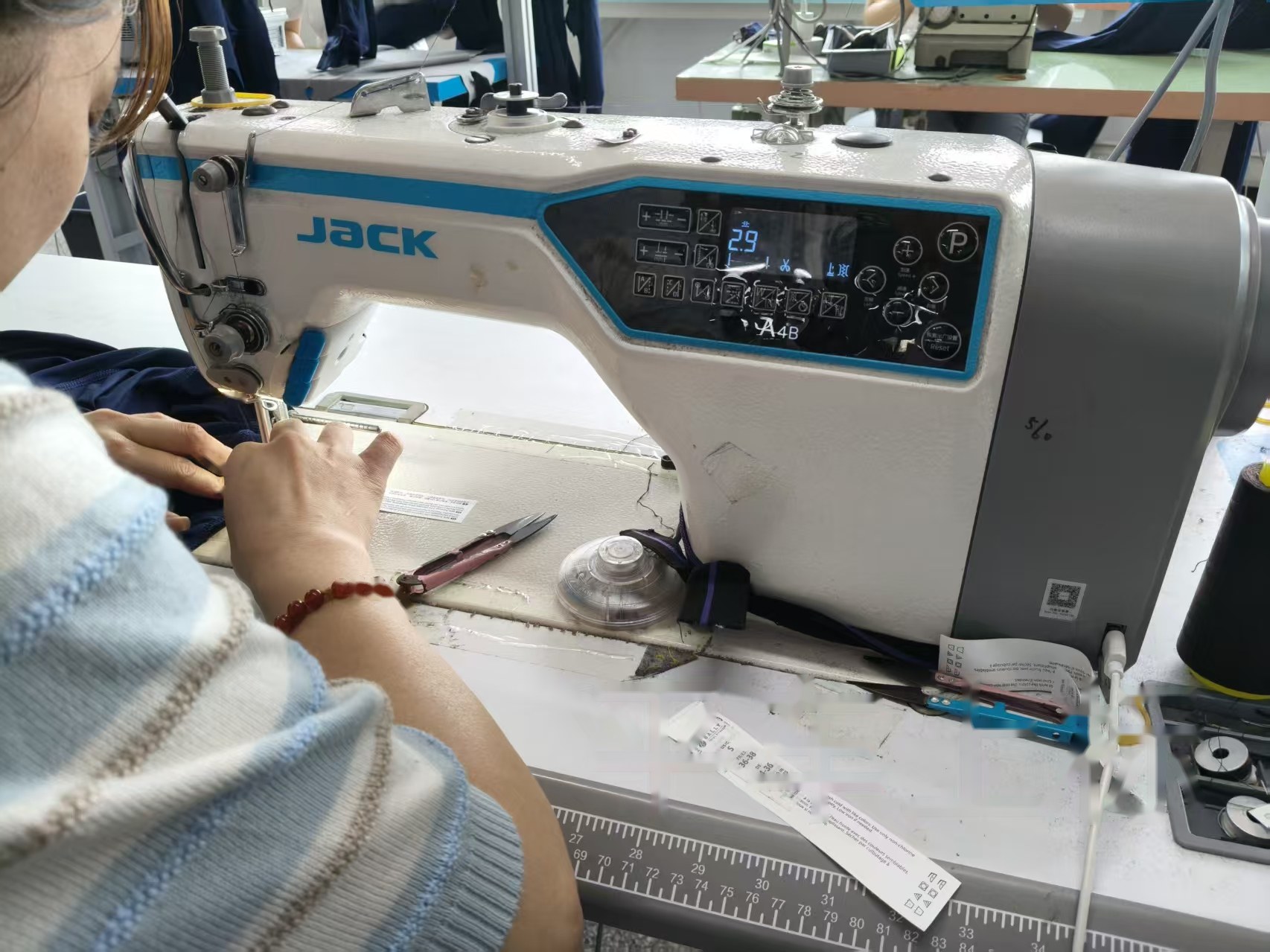
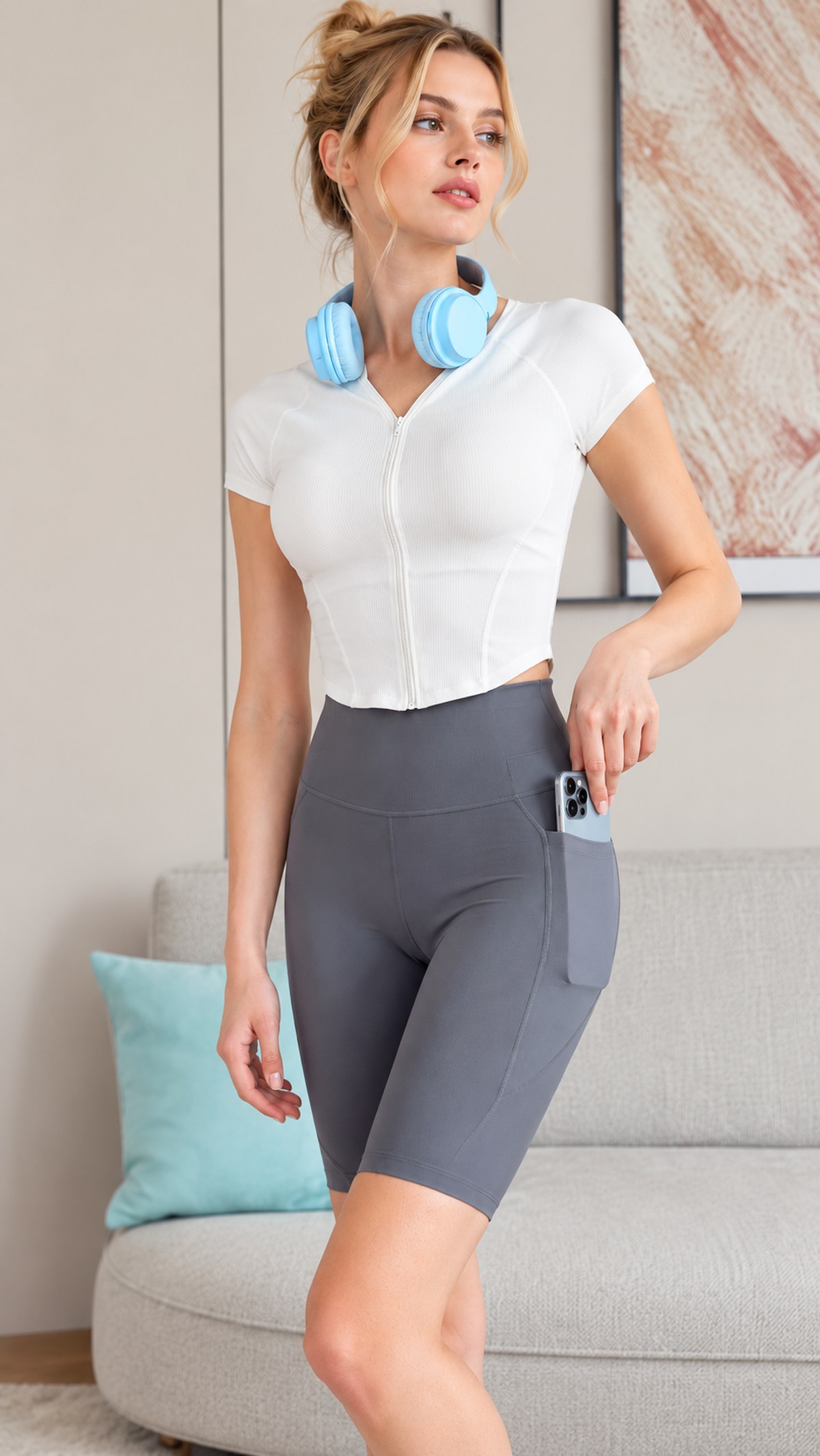
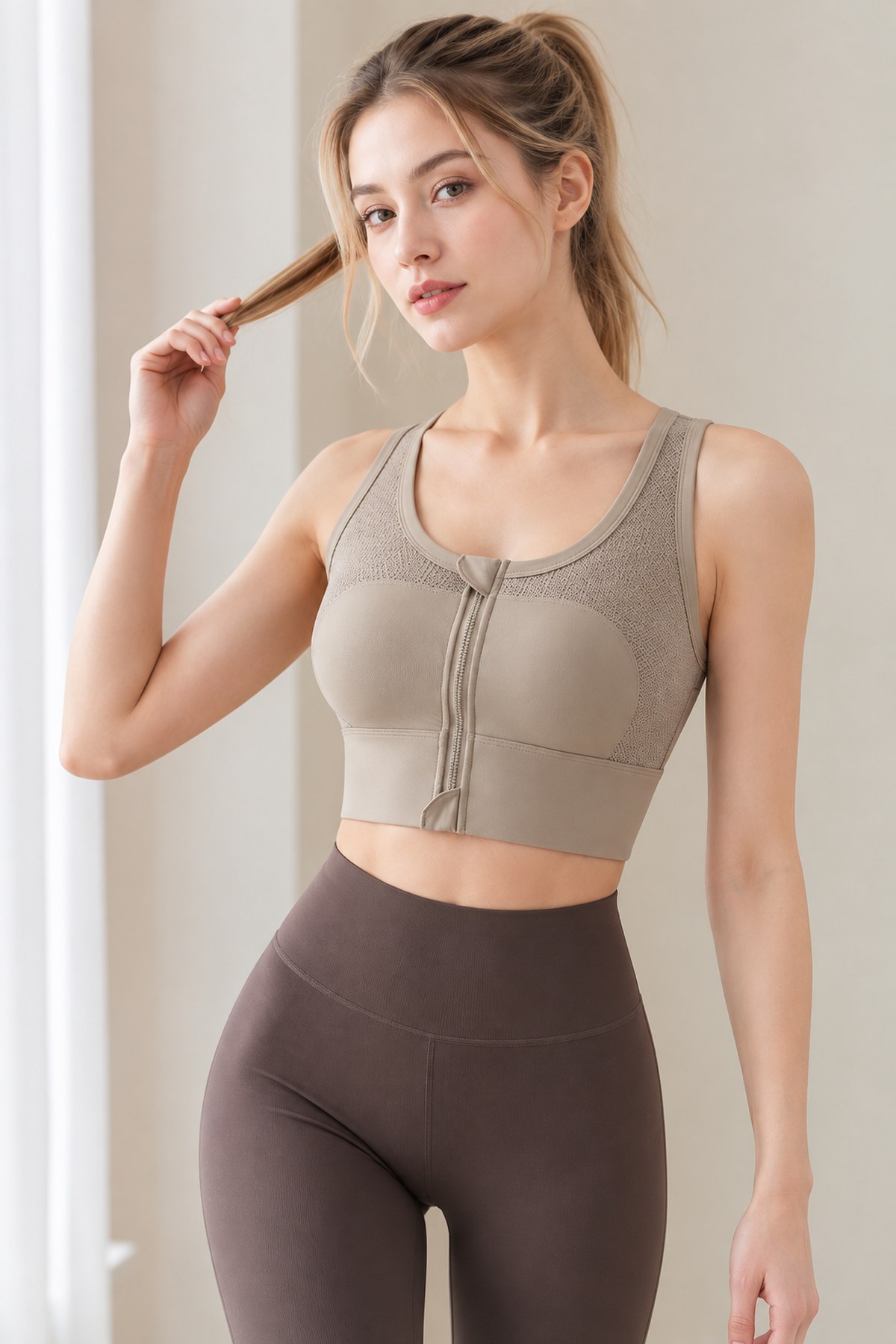
Craftsmanship & Quality
Inside a Hanging Production Line: Why Garments That Never Touch the Floor Stay Cleaner
Overhead hangers move every garment between stations on our line. What a hanging production system changes: cleaner garments, fewer handling wrinkles, and defects caught between operations.
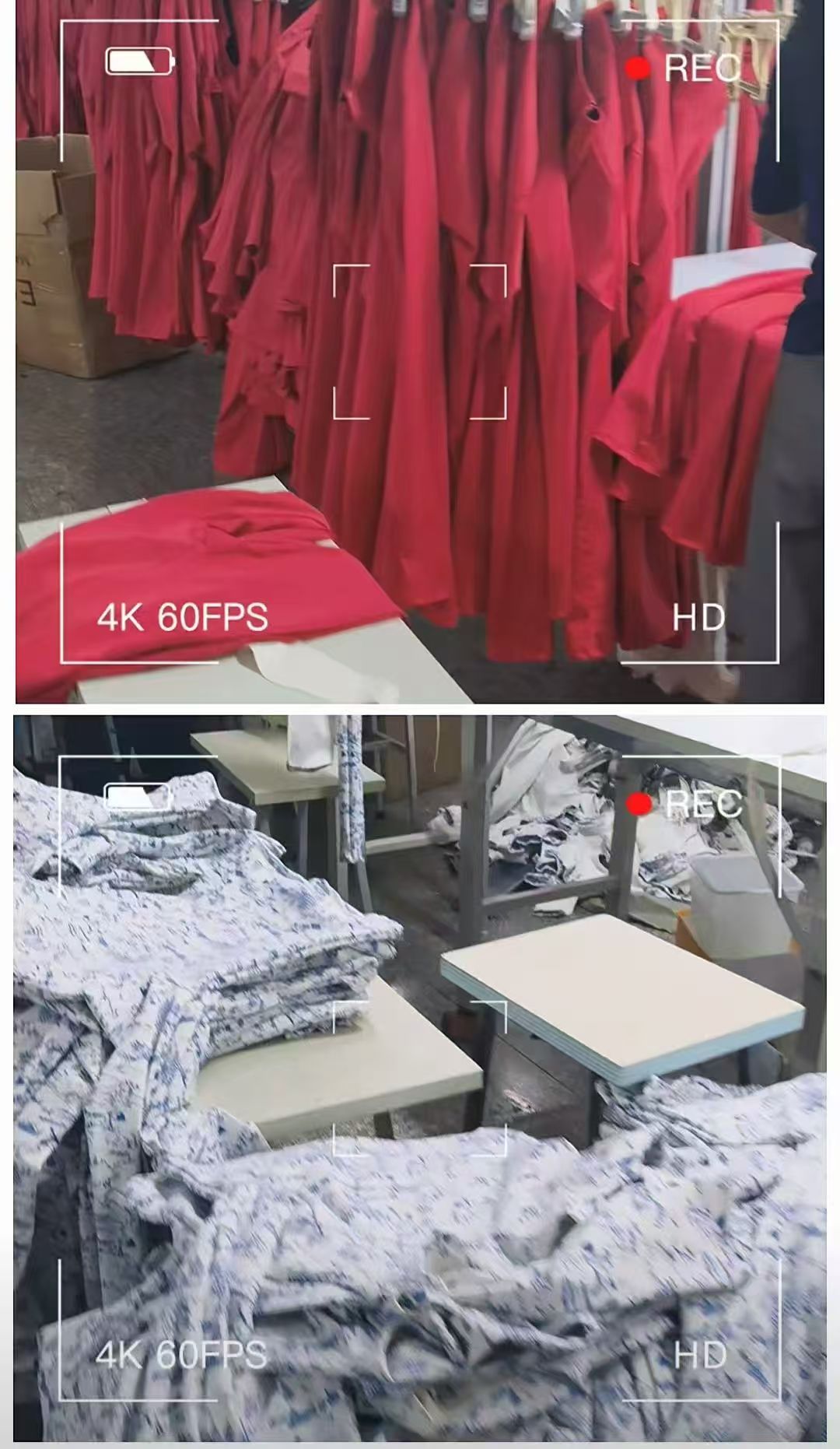
Walk into many garment workshops and you see bundles: cut panels tied in stacks, carried between stations, opened, sewn, re-tied, carried again. Walk onto our line and you see something different - every garment hanging from its own overhead trolley, gliding between stations on a rail. It is called a hanging production line (an overhead conveyor system), and it is one of those investments that looks like logistics but is actually a quality decision.
What the Hanging System Changes
Garments stay clean
Floors in any busy workshop collect lint, dust and fibers - and a bundle system puts every garment on that floor between operations. On a hanging line, garments never touch it. For light-colored activewear - white, cream, pastel - the difference is visible in the polybag, and customers notice.
Fewer handling wrinkles
Every bundle tie and re-tie creases fabric; every carry drops and drags it. Hanging transport means a garment is touched by the person sewing it and by nobody else's hands on the floor. Less remediation pressing at the end - the same principle behind our ironing-light quality culture: handle less, fix less.
Defects surface between operations
On a hanging line each piece passes every station individually and visibly. A skipped stitch at the waistband is spotted by the next operator downstream in seconds, because the garment arrives singly, not buried in a bundle. It turns every operator into an inspection point - the same self-check and mutual-check culture, supported by hardware.
What It Means for Your Order
For you as a brand, the hanging line shows up in three quiet places: garments that arrive pressed-cleaner and cleaner-out-of-the-bag; consistency from first piece to last, because every piece follows the same visible path; and faster issue-solving, because a defect flagged between stations is fixed on the same hour, not discovered in final inspection. It is one of the infrastructure investments we made so quality culture has hardware underneath it - the same reason we run inline checks on zipper plackets and hems rather than trusting final inspection.
Choosing a factory is really choosing a production system. Ours hangs every garment it sews. Come see the line, or send us your styles and let the system show you what it does to consistency. info@misskyoga.com or WhatsApp +86 136 4085 9182.