Sep 20, 2026Fit & Silhouette Engineering
Pilates vs. Yoga Wear: What Your Brand Should Know Before You Sample
A practical guide for activewear founders designing a focused 8-piece collection that performs on the reformer carriage and the yoga mat using a single 75/25 nylon-spandex fabric family.
The Physical Differences Between the Carriage and the Mat
When brand founders visit the cutting rooms of our partner factories here in Guangzhou, they often ask if they need two entirely separate product lines: one for yoga studios and one for reformer pilates studios. My answer is always grounded in how the body touches the surface beneath it. You do not need two completely separate developments, but you do need to understand the mechanical differences between how these two disciplines interact with cloth.
In a traditional yoga class, the body moves through standing postures, deep forward folds, twists, balances, and inversions. The fabric meets gravity and friction mostly against a rubber or cork mat. The key mechanical demands are stretch recovery, squat-proof opacity when the knit is stretched thin across the glutes in a forward fold, and a waistband that anchors firmly against the waist without sliding down during downward-facing dogs or sun salutations.
Pilates, specifically reformer, cadillac, and mat pilates, adds a different set of physical forces. On a reformer carriage, the wearer spends extended periods lying flat on their back, pressing their spine and shoulder blades against padded vinyl, or resting their pelvis directly on hard footbars and straps. In these positions, the body weight presses directly into every interior seam, waistband fold, and stitch line. If a pair of leggings has a thick back zipper pocket, an abrasive interior overlock seam, or hard hardware at the back of a bra strap, that construction will dig straight into the skin under full body weight.
When you design for both, you solve for the pressure points of pilates while maintaining the opacity and hold required for yoga.
Finding the Right Fabric Base: 75/25 Nylon-Spandex
A unified collection starts with fabric selection. Our core activewear is built on a nylon-spandex blend of approximately 75% nylon and 25% spandex. Nylon provides a soft, cool handfeel with strong tensile durability, while the 25% elastane content delivers four-way stretch and gentle, firm compression that recovers its shape after hours of wear.
Rather than developing half a dozen different fabric compositions, you can vary the weight (gsm) across the same 75/25 yarn blend to serve different garment categories:
• 200 to 220 GSM: This lighter weight has a fluid, second-skin drape. It is ideal for tops, light layer pieces, and camisoles where breathability, soft movement, and gentle contact are the main priorities. It skims the torso without squeezing the ribs or feeling restrictive during deep diaphragmatic breathing.
• 240 to 260 GSM: This mid-to-dense weight is the standard recommendation for bottom wear. At 240 to 260 gsm, the knit provides complete squat opacity in deep stretches while offering enough structure to support the thighs, hips, and core. It resists friction from reformer carriage vinyl and yoga mats alike without feeling heavy or stiff on the legs.
Using this single fabric foundation across tops and bottoms keeps your collection cohesive. The matte finish, dye absorption, and surface handfeel remain identical across the entire range, giving your brand a polished, intentional look.
Construction Details: Waistbands, Seams, and Shelf Bras
Once the fabric weight is set, the pattern construction decides whether a piece works equally well in a vinyasa flow or on a reformer carriage.
High-Rise Waistbands That Stay Flat
Waistbands must stay anchored without cutting into the stomach. For yoga, the waistband needs enough top-edge tension so it does not roll down during forward bends. For pilates, the band cannot have bulky inner elastic cords that pinch the lower back when lying supine. The high-rise waistbands are constructed with clean, folded top edges that distribute pressure evenly across the core, eliminating roll-down while staying smooth against the carriage.
Clean Fronts and Low-Profile Seamlines
Front-rise seams are often a source of discomfort during prolonged seated or floor work. Patterning bottoms with a no-front-seam construction removes friction entirely and prevents unwanted riding up. For structural seams along the side and inseam, flat-finish stitching keeps the interior profile smooth against the skin so that rolling movements on the mat do not leave deep indentations on the body.
Built-In Shelf Bras with Soft Underbands
Pilates and yoga require controlled, low-to-medium support rather than high-impact encapsulation. Tops cut with built-in shelf bras allow the wearer to move freely without needing separate, layered sports bras. The inner elastic band of the shelf bra must be wrapped in soft fabric to prevent chafing along the ribcage during lateral thoracic breathing.
The 8-Piece Hero Range for Yoga, Pilates, and Athleisure
To help overseas brand founders launch a clean, focused collection without overextending their product development, we developed our 2026 hero range of eight cross-functional styles. Every piece is built to transition easily from the studio floor to daily athleisure wear.
1. No-Front-Seam Leggings: Cut from 200-240 gsm nylon-spandex with a clean front panel, high-rise waistband, and minimal exterior stitch lines. They provide complete squat opacity on the mat and zero pressure points on the reformer.
2. Sculpt Leggings: A structured alternative featuring strategic curved rear seams that contour the body while maintaining a flat interior finish for floor work.
3. Foldover Flare Pants: A versatile silhouette with an adjustable foldover waistband that sits comfortably against the hips, offering a relaxed hem that works in gentle studio sessions and daily wear.
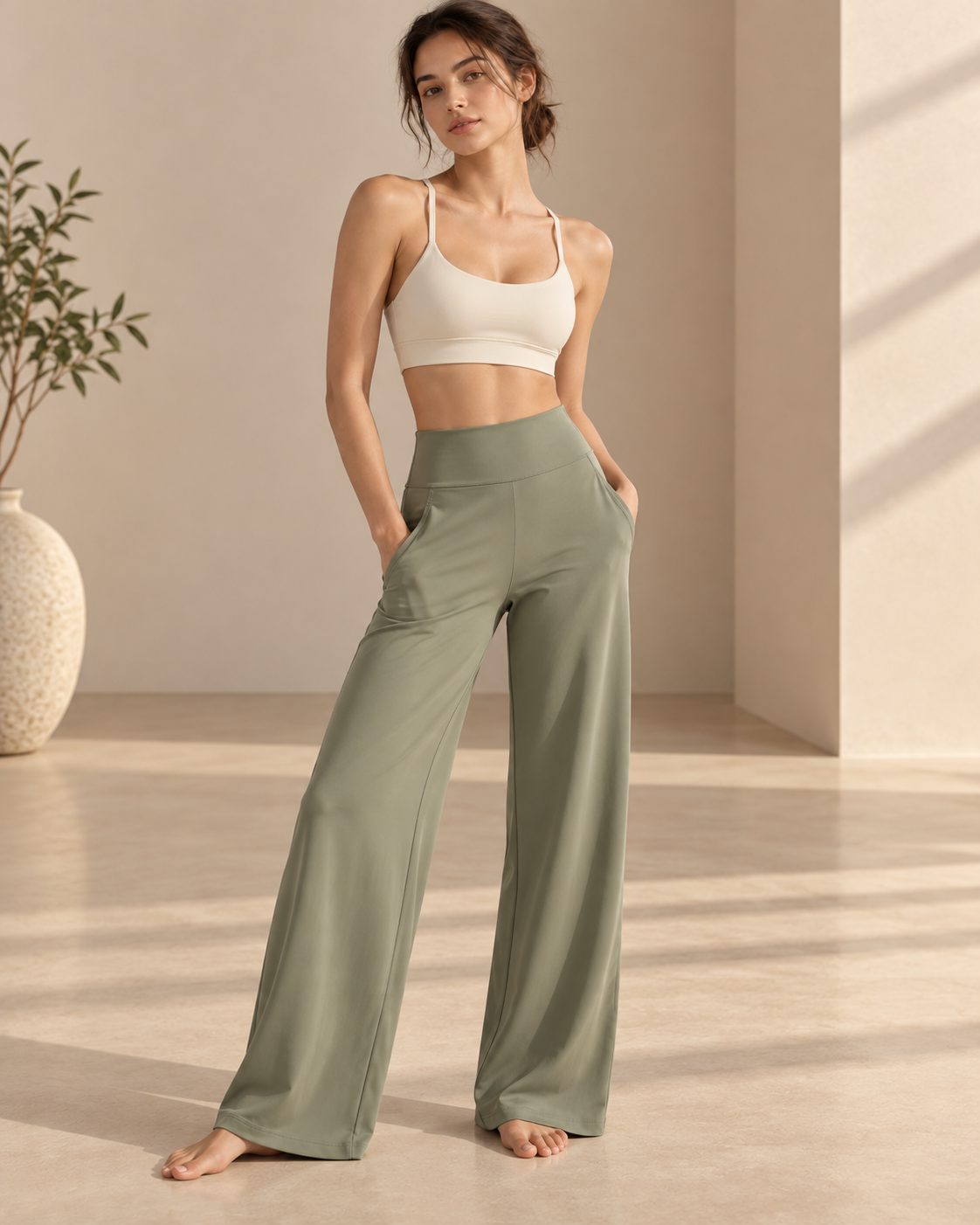
4. Straight/Wide-Leg Pants: Designed with a fluid line from hip to hem, offering full freedom of movement for warm-ups, restorative yoga, or casual studio travel.
5. Biker Shorts (5-6 Inch Inseam): The 5 to 6-inch inseam sits mid-thigh, preventing riding up during reformer footwork while giving full coverage during wide-stance yoga poses.
6. Square-Neck Longline Bra: A flattering neckline with wide shoulder straps that distribute weight evenly across the trapezius muscles. The longline body provides moderate coverage and stability without rolling upward.
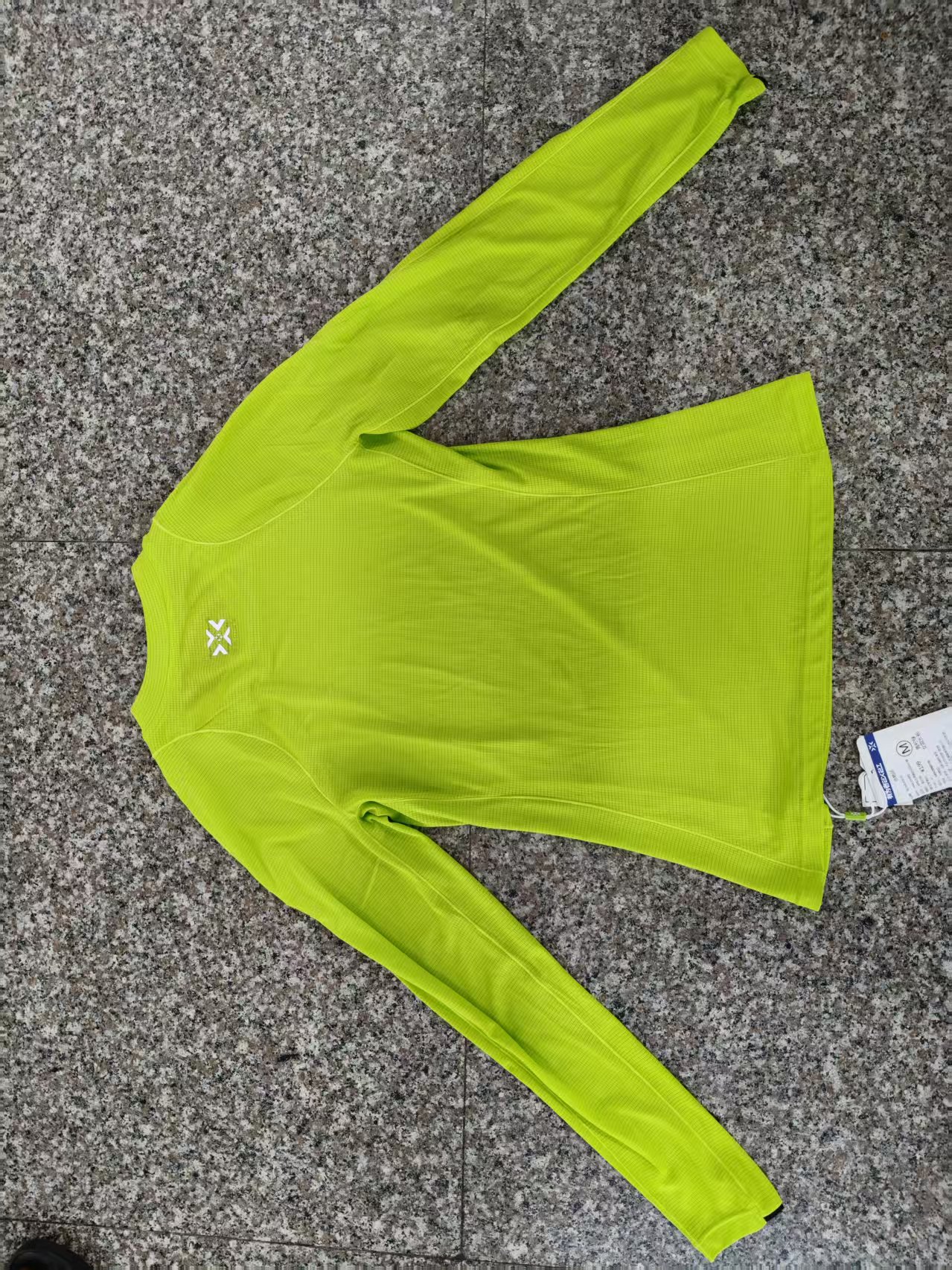
7. Cami Tank with Shelf Bra: Cut from lightweight 200-220 gsm fabric with delicate straps and an integrated shelf bra, creating an all-in-one studio top that stays put through inversions.
8. Ballet Wrap Long Sleeve: A soft, lightweight layering piece that wraps around the waist, perfect for warm-ups, cool-downs, and transitioning between the studio and the street.
A Cohesive Palette
This core collection is sampled in a refined, nature-ground palette: Black, Espresso, Cream, Sage, and Blue Grey. These tones complement each other across different top-and-bottom pairings, allowing your customers to mix and match pieces effortlessly.
Sampling and Production with Miss K
Building a balanced activewear line does not require dozens of complicated patterns. By focusing on an 8-piece core foundation, selecting proven 75/25 nylon-spandex fabric weights, and paying close attention to interior seam construction, your brand can serve both yoga and pilates communities with confidence.
At Miss K, we coordinate private label, OEM, and ODM production from Guangzhou, China, working directly with established manufacturing partners and shipping finished goods to brand founders worldwide. We work with you step-by-step through fabric selection, pattern adjustments, custom branding, and sample development so that every piece feels right in hand before you move into bulk production.
If you are ready to review our hero styles or start sampling your upcoming collection, visit our products page or get in touch with our team directly.
Email: info@misskyoga.com | WhatsApp: +86 136 4085 9182