Craftsmanship & Quality
The Underband Does 80% of the Work: Bra Band Fit Explained for Brands
Customers blame the straps when a bra fails, but the underband carries the load. Band engineering, elastic choices, closure construction and the fit checks that keep support honest.
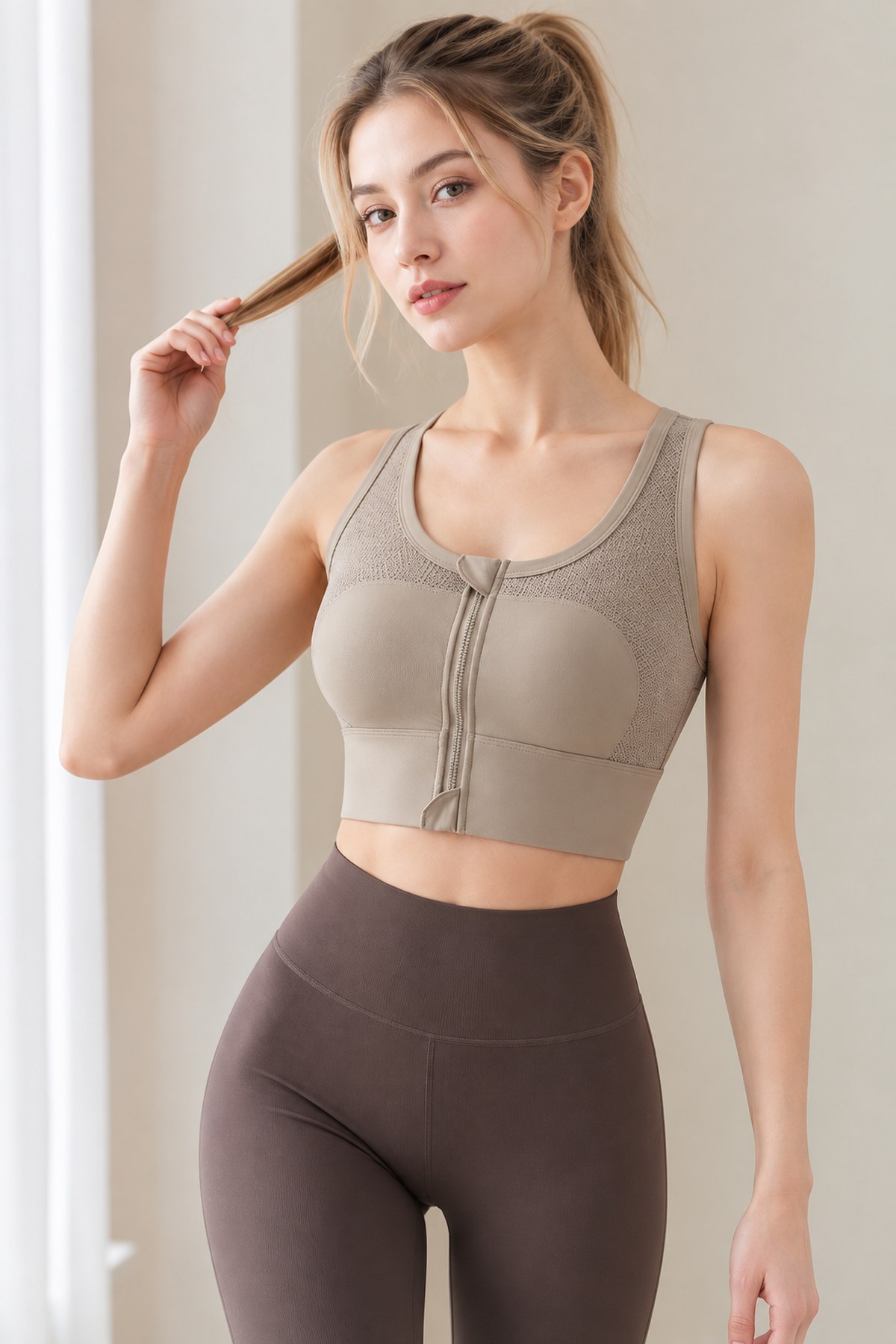
When a customer says a sports bra didn't support her, she blames the straps - they're what she can see and feel on her shoulders. But in a properly engineered bra, the underband carries most of the vertical load and the straps only position the cups. A band that rides up, stretches out, or digs in transfers the load to the shoulders, and no amount of strap engineering saves it. For brands, band construction is where support is won or lost. Here is how it works.
What the Band Actually Does
The underband is a tension ring anchored against the ribcage. Its elastic works like a spring: pre-tensioned to hold the bra's weight against the body while stretching a little with every breath and movement. When support fails, the diagnosis follows the band: does it ride up (too loose, or the elastic lost recovery), does it dig (too tight or too narrow for the load), or does it hold at first and bag out after ten washes (elastic quality or construction)?
The Engineering Levers
Band height
A taller band distributes load over more ribcage area and anchors better during impact - the reason high-impact bras extend the band below the cups. But taller also means more torso coverage and warmth: the trade-off is a style decision with a support consequence, and it should be written into the tech pack, not improvised.
Elastic choice
Underband elastics differ in stretch ratio, recovery, and degradation. A soft-touch elastic feels premium on day one and bags out by wash twenty; a firmer elastics holds tension longer at a small comfort cost. Ask the factory for the elastic's cycle test data - a band elastic should survive thousands of stretch cycles without meaningful tension loss.
Power mesh vs plain elastic
Premium sports bras replace the exposed elastic with an internal power-mesh band: a stabilizing layer sewn into the band that distributes tension smoothly and removes the dig-in line at the ribcage. It costs slightly more in materials and sewing time and is one of the clearest quality signals a bra can carry.
Closures: Where the Band Gets Its Fine-Tuning
A back closure turns the band into an adjustable ring. The engineering points: hook count (two rows for adjustability over the garment's life, three for high-impact), the stiffness of the closure wing (a soft wing flexes and lets the band ride), and the stitching box around the hooks - reinforced boxes survive hundreds of open-close cycles, flimsy ones pop. Front zips change the game entirely and carry their own rules, covered in the straps and closures guide.
The Fit Checks That Keep the Band Honest
The two-finger test
A correctly tensioned band lets two fingers slide under the back, snugly. One finger means tight; three means loose. It is the fastest check on a fit model and the one to photograph in sample reviews.
The ride-up check
Mark the band's position, run a two-minute jump set, and look: any upward migration means the band is too loose, the elastic too soft, or the band height too low for the impact level.
The wash-recovery check
Wash the sample five times and re-test the two-finger tension. A band that passes fresh and fails washed had an elastic problem sampling never caught - the same wash-test logic the colorfastness process applies to shades.
Sizing Implications for Brands
Band-driven sizing means the size run must scale the band's circumference AND its elastic grade - a 3XL band with S-grade elastic is a support failure regardless of measurements. The inclusive-sizing discipline applies: band fit at the extremes needs its own fit sessions, because band tension that works at S crushes at 3XL and vanishes at XS.
Engineering bras that actually support? Send us your reference styles - we will spec the band, elastics and closures with cycle-test data, and fit-check at every size before bulk. info@misskyoga.com or WhatsApp +86 136 4085 9182.